Description
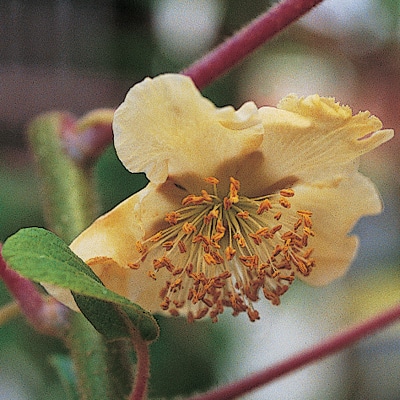
Ken’s Red is a standout kiwi berry selected for its distinctive coloration and balanced eating quality, producing smooth-skinned fruit that can develop rich red to purple tones as it ripens. The berries are sweet and aromatic, with a slightly brighter flavor profile than standard green kiwi berries, and the vine itself is vigorous and productive once established.
What sets Ken’s Red apart is its hybrid background. It’s widely described as involving red-kiwi species—commonly cited as Actinidia purpurea √ó Actinidia melanandra—rather than a straightforward green-fleshed arguta type. That mixed lineage helps explain both the deeper pigmentation and the subtle sweet-tart lift that emerges at full ripeness, especially when fruit is allowed to soften properly.
Kiwi berries—also known as hardy kiwi—are smooth-skinned, bite-size kiwis that you eat whole, skin and all. Unlike fuzzy kiwis from the grocery store, these grape-sized fruits require no peeling and soften slightly as they ripen, developing a sweet, tropical kiwi flavor that’s easy to enjoy fresh. The vines themselves are vigorous, cold-tolerant climbers well suited to trellises, pergolas, and arbors, and once established they can produce heavy crops, making kiwi berries one of the most rewarding perennial fruits for home growers.
Overview
- Fruit type: Kiwi berry (hardy kiwi) with smooth, edible skin
- Fruit size: Large grape-sized berries
- Flavor: Sweet, aromatic kiwi flavor with a mild sweet-tart lift
- Color: Green skin with flesh that can develop red to purple tones at full ripeness
- Growth habit: Vigorous climbing vine requiring a sturdy support system
- Pollination: Female; requires a compatible male hardy kiwi vine for fruiting
Growing Details
Latin Name: Actinidia arguta
Site and Soil: 1/2 day to full day of sun; well-drained soil
Rootstock: Own-root (propagated from cuttings)
Hardiness: USDA Zones 4–9
Ripening Time: Mid within kiwi berries; typically September–October (varies by region)
Fruit Size: Large grape-sized; typically ~¾–1¼ inches long once mature
Pollination: Female; requires a compatible male Actinidia arguta vine planted within 20–30 feet for fruiting. A proven option is our Male Hardy Kiwi (Meader).
Size at Maturity: Vigorous vine capable of 15–25+ feet of growth when trained; requires a strong trellis, pergola, or arbor
Bearing Age: Typically 3–4 years after planting once vines are well established and properly trained
Additional Notes
- Grower’s Insight: Ken’s Red shows its best color and flavor when fruit is allowed to fully mature. As berries soften, red pigmentation deepens and the eating quality becomes noticeably more aromatic and complete.
- Regional Insight: Kiwi berries perform well across a wide range of climates, but vines benefit from consistent sun exposure and good air movement. In cooler regions, full sun helps support both vine vigor and fruit finish.
- Taxonomy Note: Ken’s Red is often grouped with hardy kiwi (Actinidia arguta) in retail and grower contexts, but is widely described as a hybrid involving red-kiwi species (commonly cited as Actinidia purpurea √ó Actinidia melanandra, depending on source). In practical growing terms, it behaves like other hardy kiwi vines in vigor, training, and care, with its hybrid lineage showing up primarily in fruit coloration and flavor nuance.
- Explore more kiwi berry and hardy kiwi vines in our collection: Kiwi & Hardy Kiwi Vines