Description
Sabine was introduced in 1950 out of an Ottawa breeding program, from a cross between the thornless selection Spinefree and a cultivar called Clark. It also travels under its original selection number, Canada O-273.
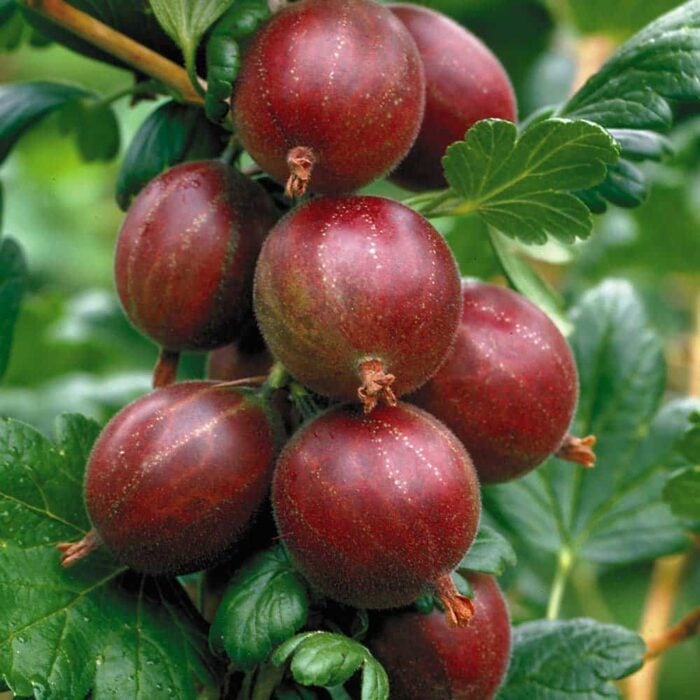
The reason to choose it is the fruit. The berries are red and medium to medium-large, sweet and full flavored rather than sharp, which puts them in dessert territory. The plant is mid-sized, upright with some spread, around 4 ft each way, and it carries few thorns, so picking is pleasant work.
Overview
- Red berries, medium to medium-large, sweet and full flavored.
- Few thorns; comfortable to pick and to prune.
- Upright with some spread, about 4 ft tall and wide.
- Good mildew tolerance; hardy and self-fertile.
Growing Details
Latin Name: Ribes ‘Sabine’
Site and Soil: Full sun to part shade; rich, well drained soil, pH 6.0 to 7.0
Hardiness: Hardy to USDA Zone 3
Rootstock: Grown from cuttings
Bearing Age: Light crop the first year; full crops by year 3 or 4
Size at Maturity: Upright with some spread, about 4 ft tall and wide
Ripening Time: Mid season for a gooseberry; June into July
Pollination: Self-fertile; a single bush sets a full crop
Pests & Diseases: Good tolerance of powdery mildew, short of immunity; currant worm strips leaves from the inside out
Additional Notes
- Grower’s Insight: Let the berries go fully red before picking. Taken early they are sharp, and the sweetness this one is grown for arrives in the last week.
- Regional Insight: Gooseberries perform best where summers stay cool to moderate, from the Upper Midwest and New England to the Pacific Northwest and Rocky Mountain states.
- Explore more berries in our collection: Berries