Description
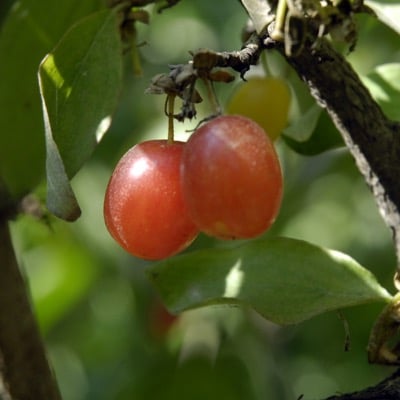
Sunrise™ is a late-ripening Cornelian cherry best known for its distinctive striped fruit, with red markings over a pinkish-red base. Originally selected in Ukraine as ‘Marina,’ it stands apart visually from the more common solid-red Cornus mas cultivars while offering dependable late-season production.
The fruit is medium to medium-large for Cornelian cherry and often compared in appearance to a small Japanese plum. Flavor is pleasantly sweet-tart, becoming more enjoyable as the fruit reaches full color and slight softness. Sunrise performs well for fresh eating at peak ripeness and remains a strong choice for jams, syrups, sauces, and other preserves.
As a late-season cultivar, Sunrise is most useful as a finisher in a staggered Cornelian cherry planting, extending harvest into early September after earlier varieties have completed.
Cornelian cherry (Cornus mas) is an edible dogwood grown for fruit—sometimes called “dogwood cherry,” even though it isn’t a true cherry. Unlike ornamental dogwoods grown mainly for blooms, Cornus mas ripens late-summer fruit with a bright, tart-sweet flavor that becomes noticeably more enjoyable at full maturity. The fruit is excellent fresh when fully ripe, and it’s one of the classic plants for high-quality jams, syrups, sauces, and preserves.
Overview
- Ukrainian Cornelian cherry selection valued for distinctive striped fruit
- Late-season ripening, extending harvest into early September
- Medium to medium-large fruit with unique visual appeal
- Pleasant sweet-tart flavor suited to fresh use and processing
- Strong finisher variety in a staggered Cornelian cherry lineup
- Improved yields with cross-pollination; plant another variety within 20–30 feet
Growing Details
Latin Name: Cornus mas ‘Marina’ (marketed as Sunrise™)
Site and Soil: 1/2 day to full day of sun; well-drained soil
Hardiness: USDA Zones 4–8
Rootstock: Grafted onto cornelian cherry rootstock
Bearing Age: 1–3 years
Size at Maturity: Typically 8–12 ft with training and pruning (shrub or small tree form)
Bloom Time: Very early spring (varies by region)
Ripening Time: Late season for Cornelian cherry; typically late Aug to early Sept (varies by region)
Fruit Size: Medium to medium-large for Cornus mas; often described as plum-like in appearance
Sugar / Brix: Unknown (no cultivar-specific published data available)
Pollination: Best fruit set with another Cornus mas variety planted within 20–30 feet
Pests & Diseases: Generally low disease pressure with good airflow and basic orchard care
Yield: Reliable once established; improved consistency and crop size with cross-pollination
Additional Notes
- Grower’s Insight: Sunrise is primarily chosen for its striped fruit and late ripening—harvest at full color for the best balance of flavor and appearance.
- Regional Insight: Particularly useful in cold-winter regions where Cornus mas thrives and late-season fruit is valued.
- Harvest Planning: Pair Sunrise with early and mid-season Cornelian cherries to extend harvest into early September.
- Explore more Cornelian cherry varieties in our collection: Cornelian Cherries