Bigger plants, shipped year round from our Seattle nursery|Every plant guaranteed|Trusted by 20,000+ growers

Cornelian Cherry (Pioneer™)

$39.99

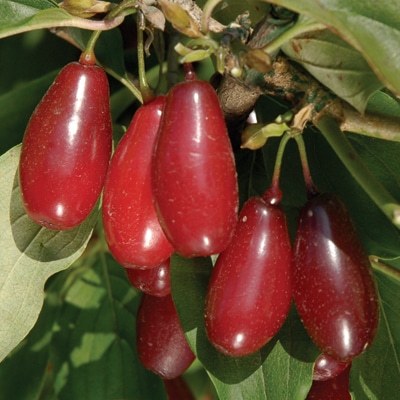
Pioneer™ is a Cornelian cherry valued for large fruit and a later harvest window that helps extend the Cornus mas season. With its elongated, dark red fruit and dependable set under cross-pollination, it’s a practical choice for growers planning a staggered Cornelian cherry harvest.

  • Mid-season to mid–late timing in our lineup (best-guess mid-August)
  • Large, elongated fruit compared to many Cornus mas cultivars
  • Strong processing cultivar for preserves, syrups, sauces, and juices
  • Productive once established with improved yields under cross-pollination
  • Best fruit set with another Cornelian cherry variety within 20–30 feet

Shop both locations freely. Picking up? Choose your location at checkout. Shipping? Stock location does not matter, we will handle it. Combined orders may take 3 to 7 days.

Total in stock: -

Add to Wishlist
Add to Wishlist
Arrives healthy, guaranteed. If it does not, we replace it.
Ships in 1 to 4 business days from our nursery near Seattle, in a 36 inch box.
Grows in zones 4 to 8.
SKU: Cornelian Cherry (Pioneer™) Categories: , Tag:
From our inbox

The bare roots are by far the most established roots that I have ever seen on a bareroot tree.

Website customer

The plants look beautiful and healthy. I was impressed by the size and strength of the 3-Cherry Tree.

Jose

An extra long box for taller trees is totally worth it to me. The trees are great.

William

Description

Pioneer™ is a Cornelian cherry valued for large fruit and a later harvest window that helps extend the Cornus mas season. With its elongated, dark red fruit and dependable set under cross-pollination, it’s a practical choice for growers planning a staggered Cornelian cherry harvest.

The fruit is consistently described as elongated—often compared to a small pear or bottle shape—giving Pioneer a distinctive look at harvest. When fully ripe, the flavor lands in the classic Cornelian cherry lane: bright, sweet-tart, and especially strong for traditional processing like jams, syrups, sauces, and juices.

Cornelian cherry (Cornus mas) is an edible dogwood grown for fruit—sometimes called “dogwood cherry,” even though it isn’t a true cherry. Unlike ornamental dogwoods grown mainly for blooms, Cornus mas ripens late-summer fruit with a bright, tart-sweet flavor that becomes noticeably more enjoyable at full maturity. The fruit is excellent fresh when fully ripe, and it’s one of the classic plants for high-quality jams, syrups, sauces, and preserves.

Overview

  • Ukrainian Cornelian cherry selection valued for large fruit and harvest-season extension
  • Elongated, pear-shaped fruit form that stands out at harvest
  • Dark red fruit at maturity with classic sweet-tart Cornus mas character
  • Strong processing profile for preserves, syrups, sauces, and juice
  • Mid-season to mid–late placement in our lineup (best-guess mid-August)
  • Improved yields with cross-pollination; plant another variety within 20–30 feet

Growing Details

Latin Name: Cornus mas ‘Lukianovskyi’ (marketed as Pioneer™)
Site and Soil: 1/2 day to full day of sun; well-drained soil
Hardiness: USDA Zones 4–8
Rootstock: Grafted onto cornelian cherry rootstock
Bearing Age: 1–3 years
Size at Maturity: Typically 8–12 ft with training and pruning (shrub or small tree form)
Bloom Time: Very early spring (varies by region)
Ripening Time: Mid-season for Cornelian cherry (best-guess mid-August in our lineup; varies by region)
Fruit Size: Large for Cornus mas; commonly reported around 5.4–6.0 g average with an elongated / pear-like shape
Sugar / Brix: Unknown (no cultivar-specific published data available)
Pollination: Best fruit set with another Cornus mas variety planted within 20–30 feet
Pests & Diseases: Generally low disease pressure with good airflow and basic orchard care
Yield: Productive once established; heavier and more consistent crops with cross-pollination

Additional Notes

  • Grower’s Insight: Pioneer’s elongated fruit shape is one of its defining traits—let fruit reach full color and slight softness for the most complete flavor.
  • Regional Insight: A practical choice for cold-winter regions where Cornus mas is valued for resilience and dependable fruiting, and for anyone building a staggered harvest plan.
  • Harvest Planning: Pair with an early cultivar (Red Star, Elegant) and a late cultivar (Exotica, Sunrise) to extend your season.
  • Explore more Cornelian cherry varieties in our collection: Cornelian Cherries
Planting & Care

At a Glance – Pioneer™ (‘Lukianovskyi’)

  • Sun: 1/2 day to full day of sun
  • Soil: Well-drained; avoid standing water; tolerant of neutral to alkaline soils
  • Water: Moderate; steady moisture during establishment and fruit fill
  • Size: Typically 8–12 ft with training and pruning
  • Pollination: Best yields with another Cornus mas variety within 20–30 feet
  • Harvest: Mid-season to mid–late in the lineup (best-guess mid-August)
  • Hardiness: USDA Zones 4–8

Planting & Care

Site Selection

  • Choose a site with at least half-day sun; full sun improves flowering and fruit quality.
  • Avoid low or wet areas—drainage matters more than soil richness.
  • Decide early whether you want shrub form (multi-stem) or small tree form (easier harvest access).

Soil & Drainage

  • Well-drained soil is essential; Cornelian cherry does not tolerate standing water.
  • This species performs well in neutral to alkaline soils when drainage is adequate.
  • Improve drainage broadly rather than enriching a narrow planting hole.

Planting

  • Dig a hole 2–3x as wide as the root mass and no deeper than the container.
  • Plant at the same depth as grown in the pot.
  • Backfill with native soil, water thoroughly, and mulch 2–3 inches deep.

Watering

  • Water consistently during the first 1–2 years to establish deep roots.
  • After establishment, allow soil to partially dry between deep waterings.
  • During fruit fill, aim for steady moisture rather than drought-to-soak swings.

Fertilizing

  • Light feeding is sufficient; compost or a balanced fertilizer in early spring if needed.
  • Avoid excessive nitrogen, which can reduce flowering and fruiting.

Training & Pruning

  • Train as a multi-stem shrub or small tree depending on your preferred form.
  • Prune lightly in late winter to remove dead, crossing, or congested branches.
  • Heavy pruning immediately after flowering will reduce fruit that season.

Pollination

  • Cornelian cherries set more reliably with cross-pollination.
  • Plant another Cornus mas variety within 20–30 feet for best results.

Harvest & Use

  • Harvest when fruit reaches full color and begins to soften slightly.
  • Best for preserves, syrups, sauces, and juices; fresh eating is best at full ripeness.
  • Use Pioneer as part of a staggered plan with earlier and later cultivars to extend harvest.