Description
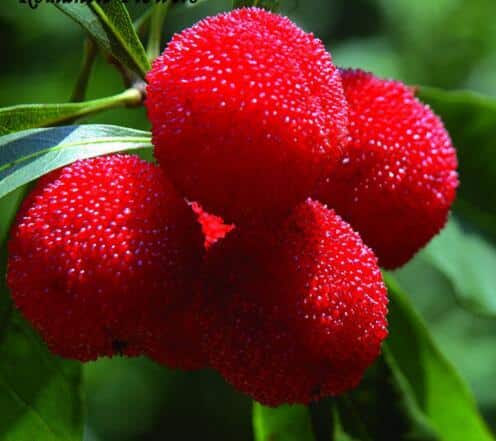
Unlike typical deep red or near-black fruiting Cornelian cherries, Coral Blaze™ ripens to a coral-pink tone that is immediately noticeable on the branch. Known in its country of origin as ‘Koralovyi Marka,’ Coral Blaze was selected in Ukraine with fruit quality in mind—larger size, improved sweetness, and a distinctive visual identity.
The fruit itself is broad and plum-like, averaging noticeably larger than standard Cornus mas types. Flavor is sweet-tart, as expected for Cornelian cherry, but Coral Blaze consistently leans sweeter than many traditional selections, making it more approachable for fresh eating while remaining excellent for jams, syrups, sauces, and preserves.
Like most Cornelian cherries, fruit quality peaks when harvest timing is managed carefully. Fully ripe fruit can loosen and drop, so harvesting at full color—or just as softening begins—helps capture the best flavor and minimize loss.
Cornelian cherry (Cornus mas) is an edible dogwood grown for fruit—sometimes called “dogwood cherry,” even though it isn’t a true cherry. Unlike ornamental dogwoods grown mainly for blooms, Cornus mas ripens late-summer fruit with a bright, tart-sweet flavor that becomes noticeably more enjoyable at full maturity. The fruit is excellent fresh when fully ripe, and it’s one of the classic plants for high-quality jams, syrups, sauces, and preserves.
Overview
- Ukrainian-bred Cornelian cherry selected for improved fruit quality
- Uncommon coral-pink fruit coloration at full maturity
- Large fruit for Cornus mas, averaging about 5.8–6.0 g
- Sweet-leaning profile with reported sugars around 12.7–14%
- Early-to-mid season ripening for Cornelian cherry (often mid-August)
- Improved yields with cross-pollination; plant another variety within 20–30 feet
Growing Details
Latin Name: Cornus mas ‘Koralovyi Marka’ (marketed as Coral Blaze™)
Site and Soil: 1/2 day to full day of sun; well-drained soil
Hardiness: USDA Zones 4–8
Rootstock: Grafted onto cornelian cherry rootstock
Bearing Age: Typically 1-3 years after planting, with increasing yields as plants mature
Size at Maturity: Commonly 8-12 ft depending on training and pruning (shrub or small tree form)
Bloom Time: Very early spring (varies by region)
Ripening Time: Early-to-mid season for Cornelian cherry; typically around Aug 15–20 in Eastern Europe (varies by region)
Fruit Size: Large for Cornus mas; typically ~5.8–6.0 g average (often up to ~7 g); about 22–26 mm long and 19–20 mm wide
Sugar / Brix: Reported ~12.7–14% sugars (varies by ripeness and growing conditions)
Pollination: Best fruit set with another Cornus mas variety planted within 20–30 feet
Pests & Diseases: Generally low disease pressure with good airflow and basic orchard care
Yield: Productive once established; heavier and more consistent crops with cross-pollination
Additional Notes
- Grower’s Insight: Coral Blaze reaches its best flavor at full coral color; fruit harvested too early will be noticeably more tart.
- Regional Insight: Particularly well suited to regions with cold winters and moderate summers, including the Upper Midwest, Northeast, and similar climates where Cornus mas thrives.
- Harvest Tip: Fully ripe fruit can drop—timely harvest or tarp-and-shake methods help reduce loss on productive plants.
- Explore more Cornelian cherry varieties in our collection: Cornelian Cherries