Description
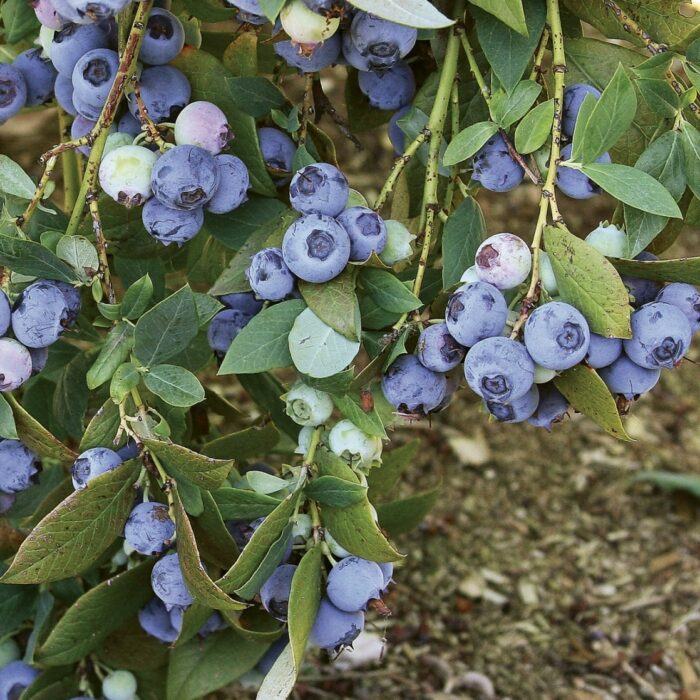
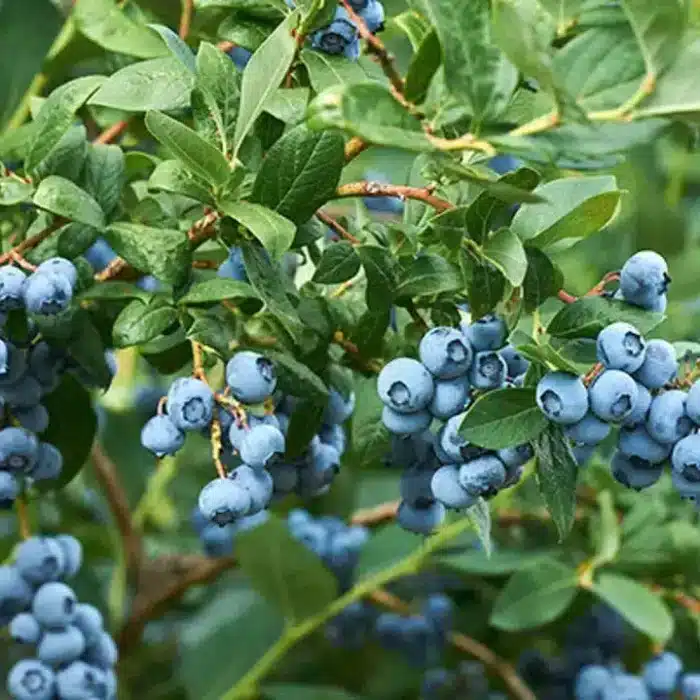
Chippewa is a half-high blueberry, a cross of highbush and the wild lowbush blueberry, developed at the University of Minnesota for places where ordinary blueberries do not survive the winter. It stays compact and upright at about 4 ft, with most of the fruiting wood low enough to be protected by snow.
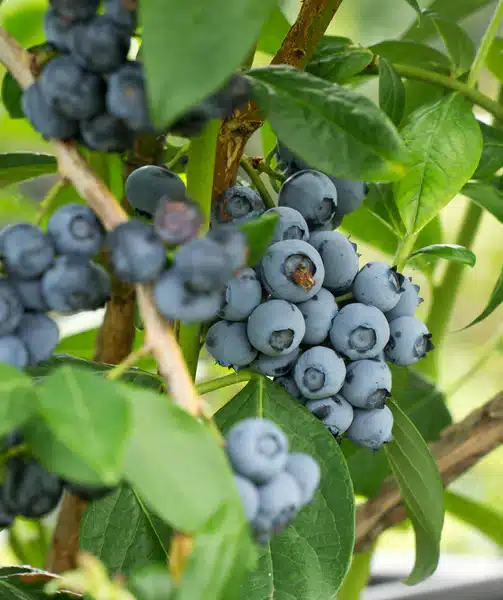
The fruit is the reason to choose it over the other half-highs: medium sized, very light blue, medium firm and notably sweet, ripening in midseason. The compact shape makes it a sensible container plant and a tidy low hedge as well as a fruiting bush.
Overview
- Very sweet, very light blue berries in midseason.
- Half-high type, compact and upright to about 4 ft.
- Bred in Minnesota for severe winters.
- Suits containers, low hedges and foundation plantings.
Growing Details
Latin Name: Vaccinium corymbosum x angustifolium ‘Chippewa’
Site and Soil: Full sun; acidic, well drained soil, pH 4.5 to 5.5
Hardiness: Hardy to USDA Zone 3
Rootstock: Grown from cuttings or tissue culture
Bearing Age: Fruits right away; full production in 5 to 6 years
Size at Maturity: Half-high, compact and upright, to about 4 ft
Ripening Time: Mid season; July into August
Pollination: Self-fertile; a second blueberry variety improves size and yield
Additional Notes
- Grower’s Insight: Half-highs keep their fruiting wood low, which is why they come through winters that strip a tall blueberry.
- Regional Insight: Blueberries crop best where winters are cold enough to meet their chill and the soil is naturally acid, which covers most of the country once the planting hole is prepared properly.
- Explore more berries in our collection: Berries