Bigger plants, shipped year round from our Seattle nursery|Every plant guaranteed|Trusted by 20,000+ growers

Black Currant (Titania)

$19.99

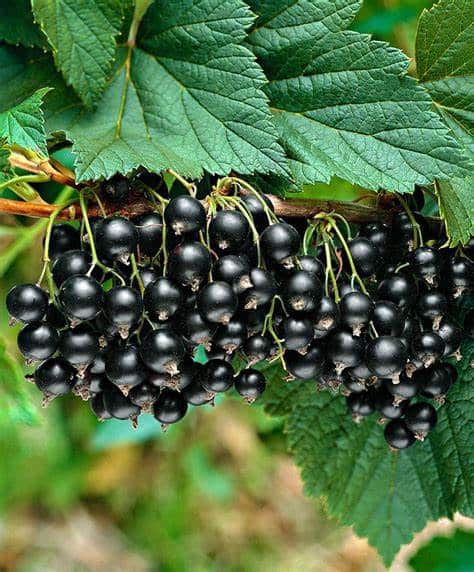
Titania is a Swedish blackcurrant bred by Pal Tamas whose berries ripen close to together, so a bush is picked in one pass rather than three. A mature plant carries 10 to 20 lb of fruit.

  • Berries of a cluster ripen at close to the same time.
  • 10 to 20 lb per mature plant.
  • Large fruit on a bushy, thornless plant of about 4 ft.
  • Balanced rather than sharp, and the cultivar breeders measure others against.
  • Resistant to American powdery mildew and to white pine blister rust.

Shop both locations freely. Picking up? Choose your location at checkout. Shipping? Stock location does not matter, we will handle it. Combined orders may take 3 to 7 days.

Total in stock: -

Add to Wishlist
Add to Wishlist
Arrives healthy, guaranteed. If it does not, we replace it.
Ships in 1 to 4 business days from our nursery near Seattle, in a 36 inch box.
SKU: Black Currant (Titania) Categories: , Tag:
From our inbox

The packaging for those kiwis was brilliant and by far the best packaging job out of any place I ordered from this year. Your Annas are tough as nails.

Travis

Absolutely beautiful trees, especially compared to some of the other mail order bare roots I have gotten from other companies.

Website customer

It looks like it is at least 7 feet tall. I certainly was not expecting it to be that big.

Lisa

Description

The tedious part of a blackcurrant harvest is that the fruit does not agree with itself. A cluster holds ripe, nearly ripe and green berries at once, so the bush gets picked over two or three times and the last pass is never worth what the first one was. Titania came out of Pal Tamas’s breeding work at Tollarp in Sweden, a 1969 cross selected in 1974 and introduced in 1984, and the trait it is known for is that its berries come ready together.

Put that alongside the yield and it stops being a convenience and starts being an argument. A mature plant carries 10 to 20 lb, and getting most of it in a single pass is the difference between a crop you process and a crop you mean to process and then do not.

It is also the reference point. Blackcurrant breeding trials use Titania as the standard cultivar that new selections are measured against, which tells you where the flavour sits: not the sharpest currant and not a mild one, but the middle that everything else gets compared to. The plant is undemanding to match, bushy and thornless at about 4 ft, with documented resistance to both diseases that trouble blackcurrants. It is self-fertile, though a second cultivar in bee range will improve the set.

Overview

  • Bred by Pal Tamas at Tollarp, Sweden; crossed 1969, introduced 1984.
  • Berries of a cluster ripen close to together, so the bush picks in one pass.
  • 10 to 20 lb per mature plant.
  • Large berries.
  • Bushy and thornless, roughly 4 ft tall and wide.
  • Balanced flavour; used as the standard cultivar in breeding trials.
  • Resistant to American powdery mildew and to white pine blister rust.
  • Self-fertile; better crops with a second cultivar nearby.

Growing Details

Latin Name: Ribes nigrum ‘Titania’
Site and Soil: Full sun to part shade, with afternoon shade where summers are hot; moist, well drained soil
Hardiness: Hardy to roughly -40 F, USDA Zone 3
Propagation: Grown on own roots from cuttings
Size at Maturity: About 4 ft tall and wide, bushy and thornless
Fruit: Large black berries, with the berries of a cluster ripening at close to the same time
Flavour: Balanced rather than sharp; used as the standard cultivar in blackcurrant breeding trials, which places it mid-range against the species
Yield: 10 to 20 lb per plant at maturity
Pollination: Self-fertile; a second blackcurrant cultivar within bee flight improves set
Pests & Diseases: Resistant to American powdery mildew and to white pine blister rust. Currants are restricted in some counties and states; check your local rules before ordering

Additional Notes

  • Grower’s Insight: Plant this one if you actually intend to process the crop, because a bush that comes ready together is the difference between twenty pounds of fruit in the freezer and twenty pounds you kept meaning to get back to.
  • Regional Insight: Bred in southern Sweden for a cool maritime summer, which is why it reads so naturally in the maritime Northwest, the Northeast and the Upper Midwest; through the interior West and the mid-South the limit is heat at the root rather than winter cold, and afternoon shade with steady water is what carries it there.
  • Currants host white pine blister rust and remain restricted in parts of the United States. Titania’s resistance does not change the regulations, which apply to the plant rather than the cultivar. Check your county and state rules before ordering.
  • Explore more currants in our collection: Currants

Planting & Care

At a Glance
• Full sun in cool climates, afternoon shade where summers are hot
• Moist, well drained soil, mulched
• A second blackcurrant improves the crop
• Prune hard: it fruits on one year old wood
• Pick in one pass

Planting & Care: Titania Blackcurrant

Blackcurrants are a cool-climate fruit with shallow roots, so the thing to get right is the surface: moist, mulched and not baking. Full sun suits it where summers are mild, and afternoon shade is the better call anywhere the July afternoons run hot.

Feed it. Blackcurrants are hungrier than red and pink currants, and a plant expected to carry 10 to 20 lb wants compost or a balanced feed in early spring rather than being left to fend for itself.

Prune it as a blackcurrant, which is the opposite of how you treat a red currant. Fruit comes on wood made the previous season, so the winter job is cutting roughly a third of the oldest stems out at ground level and letting new shoots replace them. Left unpruned it will keep fruiting on tired wood and the berries get smaller every year.

Plant a second blackcurrant cultivar within bee range if you have room. Titania sets on its own, so this is a yield decision rather than a fruit-or-no-fruit one, but it is a real difference and it is cheaper to make at planting than to retrofit.

Harvest in one pass once the cluster has gone uniformly black. That is what this cultivar is for, and going over it three times out of habit wastes the trait you paid for.