Asian Pear Tree (Hosui)

(1 customer review)

Price range: $39.99 through $59.99

Hosui is one of the most highly regarded Asian pears, celebrated for its exceptional juiciness, rich sweetness, and crisp, refreshing bite.

  • Premium Asian pear with outstanding flavor
  • Very juicy, sweet, and crisp flesh
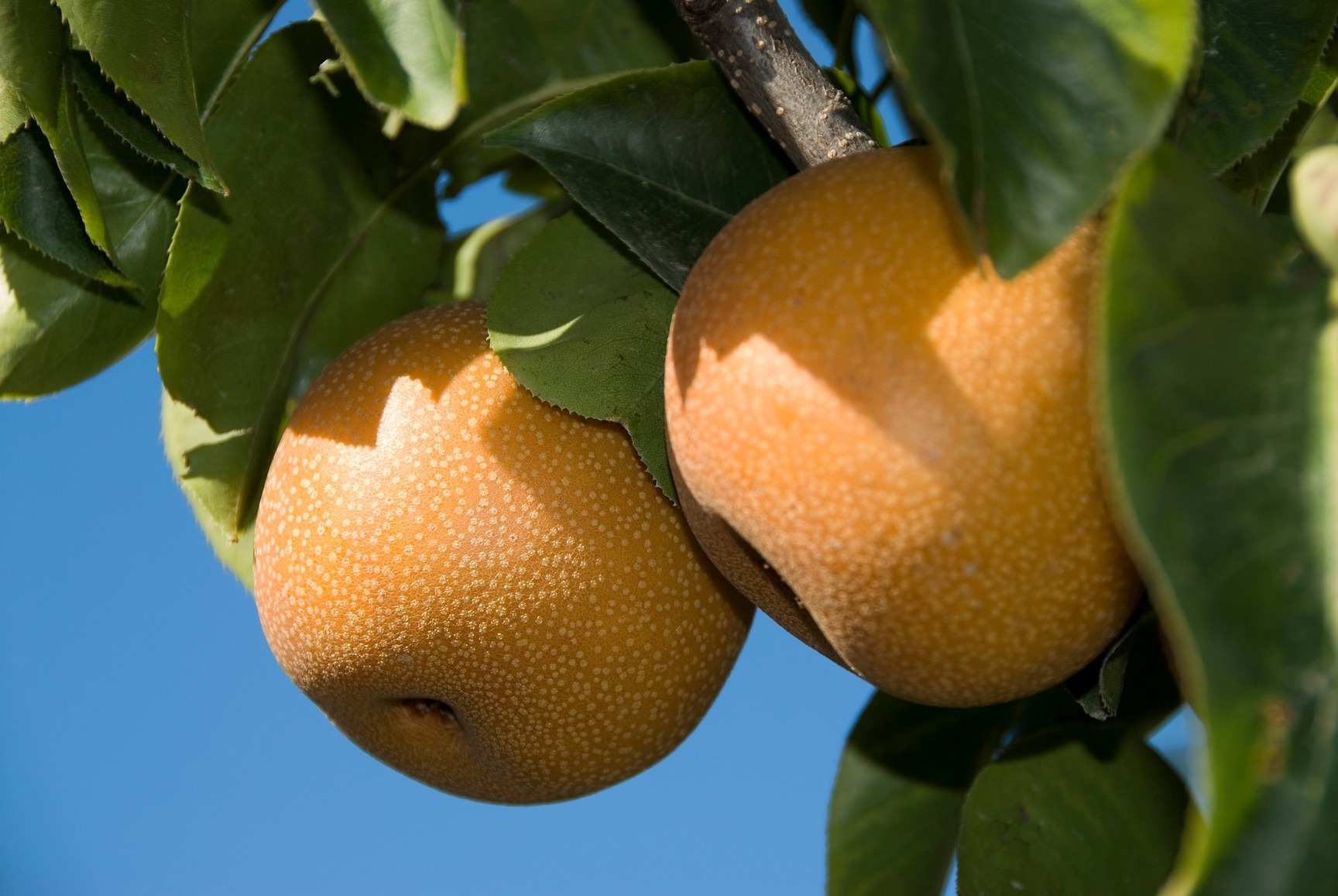
  • Large fruit with golden-brown russeted skin
  • Mid-season to late-summer harvest
  • Heavier yields with a pollination partner
Add to Wishlist
Add to Wishlist
SKU: N/A Categories: , Tag:

Description

Hosui is widely considered a benchmark for Asian pear flavor. Developed in Japan, it is prized for its explosive juiciness, balanced sweetness, and clean, refreshing texture. Few Asian pears deliver the same combination of size, eating quality, and consistency.

The fruit is large and round with golden-brown to bronze russeted skin and bright white flesh. Unlike European pears, Hosui is eaten crisp rather than soft-ripened, offering a satisfying snap and abundant juice with every bite. Its flavor is sweet and mild, making it an easy favorite for fresh eating.

Ripening in mid-season to late summer, Hosui produces dependable crops when properly pollinated. It performs well across a wide range of temperate climates and is an excellent choice for growers seeking top-tier eating quality without the need for post-harvest ripening.

Overview

  • Premium Japanese Asian pear with exceptional flavor
  • Very juicy, sweet, and crisp texture
  • Large fruit with golden-brown russeted skin
  • Mid-season to late-summer ripening
  • Heavy yields once established

Growing Details

Latin Name: Pyrus pyrifolia ‘Hosui’
Site and Soil: 1/2 day to full day of sun; well-drained soil
Chill Requirement: Approximately 300–400 hours
Hardiness: USDA Zone 5–9
Rootstock: OHxF 97
Bearing Age: 1–3 years
Size at Maturity: Easily maintained with pruning
Bloom Time: Mid-season
Ripening Time: Mid-season; late summer
Pollination: Partially self-fertile; higher yields with a partner pear planted within 20–30 feet
Pests & Diseases: Typical pear pest and disease pressures; managed with good airflow and routine orchard care
Yield: Heavy and reliable once established

Additional Notes

  • Grower’s Insight: Hosui is frequently ranked among the best-tasting Asian pears in formal evaluations, earning its reputation as a flavor benchmark.
  • Regional Insight: Performs especially well in temperate regions with warm summers, including the Pacific Northwest, where late-summer heat supports full sweetness and juiciness.
  • Harvest fruit fully mature and enjoy immediately—Hosui is meant to be eaten crisp.
  • Best suited for fresh eating due to its exceptional juiciness and clean texture.
  • Explore more Asian pear varieties in our collection: Asian Pear Trees
Planting & Care

At a Glance – Hosui Asian Pear

  • Sun: 1/2 day to full day of sun
  • Soil: Prefers well-drained soil; tolerates heavier textures
  • Water: Moderate; consistent moisture during establishment
  • Size: Easily maintained with pruning
  • Pollination: Partially self-fruitful; better yields with a partner
  • Harvest: Mid-season to late summer
  • Hardiness: USDA Zone 5–9

Planting & Care – Hosui Asian Pear

Site Selection

  • Choose a location with at least 1/2 day of sun; full sun supports best fruit quality.
  • Good air movement helps maintain healthy growth and consistent production.
  • Avoid low areas where cold air settles.

Soil Preparation

  • Asian pears perform best in deep, well-drained soil.
  • They tolerate heavier soils better than many fruit trees, but prolonged saturation reduces vigor and productivity.
  • Lightly amend poor soils with compost if needed; avoid heavy nitrogen at planting.
  • Ideal soil pH is between 6.0 and 7.0.

Planting Instructions

  • Dig a hole twice the width of the root system.
  • Plant at the same depth the tree grew in the nursery, with the root flare at or just above soil level.
  • Backfill with native soil and water thoroughly.
  • Mulch 2–3″ deep, keeping mulch several inches away from the trunk.

Watering & Fertilizing

  • During the first 1–2 years, keep soil consistently moist but not saturated.
  • In cooler or mild climates, deep water 1–2 times per week during dry weather.
  • In hotter or windier conditions, plan on 2–3 deep waterings per week during heat spells.
  • Check soil 4–6″ down; if it feels dry at that depth, it’s time to water again.
  • Once established (year 3+), deep watering every 7–14 days during dry periods is typically sufficient.
  • Hosui responds best to moderate feeding; a light application of balanced fertilizer in early spring is usually adequate.
  • Avoid heavy nitrogen, which can push excessive vegetative growth at the expense of fruiting.

Pollination

  • Hosui is partially self-fruitful.
  • For heavier crops, plant with another Asian pear or compatible European pear.
  • Plant pollination partners within 20–30 feet for best results.

Pruning & Training

  • Train to a central leader or modified central leader.
  • Prune during late winter to remove crossing or shaded branches.
  • Asian pears fruit on spurs—avoid over-pruning productive wood.
  • Regular pruning improves fruit size and keeps trees manageable.

Harvest & Use

  • Harvest fruit when fully sized and colored.
  • Hosui is eaten crisp and firm, not soft-ripened.
  • Best enjoyed fresh due to its exceptional juiciness.

General Tips

  • Thin fruit in heavy-set years to improve size and reduce limb stress.
  • Mulch annually to conserve moisture and suppress weeds.
  • Consistent early care sets the foundation for heavy, reliable crops.

1 review for Asian Pear Tree (Hosui)

  1. kam chan

    Housi Asian pear is the best of the best, it is very juicy and very productive, just spray the pear trees with Neem oil, spray before flowering, after formed fruit, one in late July and spray again when dormant.

    • Troy Picou

      Hi Kam! Yes we agree, the Hosui Asian pear is one of the best varieties we have tried!

Add a review

Your email address will not be published. Required fields are marked *