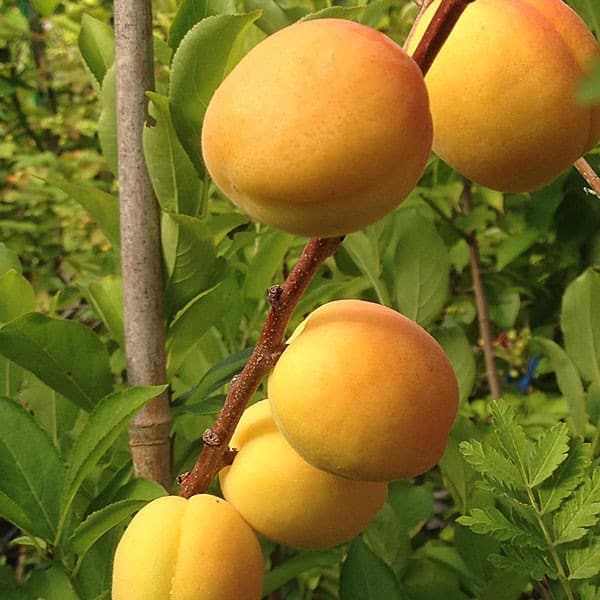
Description
The Hunza Apricot traces its reputation to the remote Hunza Valley of northern Pakistan, a high-elevation Himalayan region where apricots have been cultivated for generations. They were a staple food preserved for winter and pressed for oil from their kernels.
Today, Hunza apricot trees are valued by orchardists and home growers alike for their sweet flavor, fragrant aroma, and dependable harvests. The fruit is medium sized with classic orange flesh and a well-balanced apricot sweetness that works beautifully both fresh and dried.
Overview
- Historic apricot associated with the Himalayan Hunza Valley.
- Sweet, aromatic fruit suitable for fresh eating and drying.
- Mid-season ripening with reliable production.
- Self-fertile tree for home orchards.
- Well suited to temperate climates with warm summers.
Growing Details
Latin Name: Prunus armeniaca
Site and Soil: 1/2 day to full day of sun; well-drained soil
Chill Requirement: Approximately 500–700 hours
Hardiness: USDA Zones 5–8
Rootstock: Citation (semi-dwarf)
Bearing Age: 1–3 years
Size at Maturity:12–16 ft unpruned, easily maintained 8–12 ft with pruning
Bloom Time: Early spring
Ripening Time: Mid-season; typically late June to early July in warmer climates
Pollination: Self-fertile
Additional Notes
- Grower’s Insight: Apricots from the Hunza region were traditionally sun-dried on rooftops and stored as a winter food source, which is why varieties associated with this region are especially valued for their drying quality.
- Regional Insight: Hunza apricot performs well in regions with warm, dry summers. In cooler coastal climates like the Pacific Northwest, planting in a sunny, well-drained site improves fruit sweetness and ripening.
- Explore more apricot varieties in our collection: Apricot Trees