Description
Braeburn is a well-loved apple that delivers bold flavor without losing balance. Discovered in New Zealand and grown worldwide, it’s prized for combining sweetness and acidity with a firm, satisfying crunch.
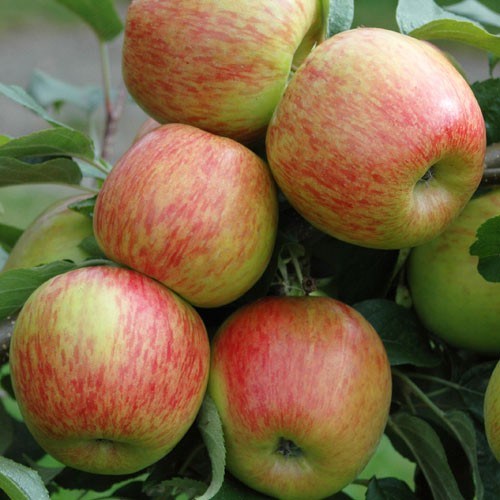
The fruit is medium to large with attractive red striping over a green-yellow background. Braeburn’s flesh stays crisp and juicy, making it a versatile apple for fresh eating, baking, and kitchen use. Unlike softer late apples, it holds its texture well after harvest.
Ripening late in the season, Braeburn is also valued as a keeper apple. With proper storage, it can be enjoyed well beyond harvest, making it a great choice for growers who want apples that last into winter.
Overview
- Late-season apple with bold sweet-tart flavor
- Firm, crisp texture and juicy flesh
- Excellent fresh, baked, or sliced
- Good keeping quality compared to many apples
- Partially self-fertile; improved yields with a pollination partner
Growing Details
Latin Name: Malus domestica ‘Braeburn’
Site and Soil: 1/2 day to full day of sun; well-drained soil
Chill Requirement: Approximately 700 hours
Hardiness: USDA Zone 4–8
Rootstock: M-106 (semi-dwarf)
Bearing Age: 1–3 years
Size at Maturity: Typically maintained at 12–16 ft tall and wide with pruning
Bloom Time: Mid- to late-season
Ripening Time: Late season; typically October (varies by region)
Flowering Group: Group 4 (late-mid season)
Pollination: Partially self-fertile; heavier crops with a compatible apple variety planted within 20–30 feet
Pests & Diseases: Standard apple pest and disease considerations; good airflow and routine care are important
Yield: Reliable producer once established
Additional Notes
- Grower’s Insight: Braeburn has become a parent to several modern apple varieties, valued by breeders for its strong flavor balance and firm texture.
- Regional Insight: Performs especially well in temperate regions with cool nights and a true fall season—conditions that help preserve acidity and enhance flavor.
- Braeburn’s firm flesh helps it hold texture in baking and slicing.
- Thinning in heavy crop years improves size and overall eating quality.
- Explore more apples in our collection: Apple Trees