Description
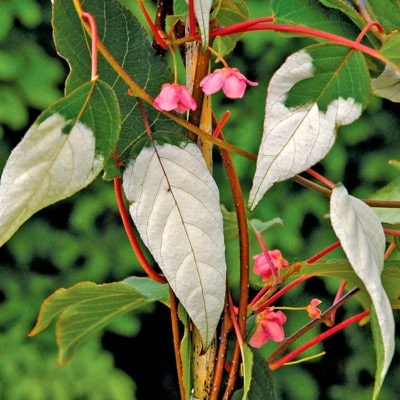
Actinidia pilosula is an ornamental kiwi vine prized for its foliage and flowers rather than fruit. Native to China, this species stands apart from fruiting kiwis with its long, narrow, dark green leaves that become decorated with striking white patches and accents as the season progresses.
In spring, the vine produces profuse, fragrant flowers with soft rose-pink tones, adding another layer of interest beyond foliage alone. The combination of variegation and bloom makes Actinidia pilosula especially appealing on trellises, arbors, and garden structures where visual impact matters.
This offering is a male clone and does not produce fruit. Its value lies in ornamental performance—manageable growth, attractive leaves, and seasonal flowers—making it a refined choice for gardeners who want a decorative climbing vine without the vigor and pruning demands of fruiting kiwi species.
Overview
- Plant type: Ornamental kiwi vine
- Primary feature: Variegated foliage with white patches and accents
- Flowers: Fragrant, rose-pink blooms in spring
- Growth habit: Compact, decorative climbing vine
- Fruit: None (male clone)
- Use: Trellises, arbors, fences, and ornamental garden structures
Growing Details
Latin Name: Actinidia pilosula
Site and Soil: Partial shade to light sun; well-drained soil
Hardiness: USDA Zones 5–9 (hardy to approximately -10°F)
Rootstock: Own-root (propagated from cuttings)
Bearing Age: Not applicable (ornamental male; does not produce fruit)
Size at Maturity: Compact climbing vine; typically smaller and easier to manage than fruiting kiwis
Bloom Time: Spring (varies by region)
Flower Color: Rose-pink, fragrant
Pests & Diseases: Generally low disease pressure with good drainage and airflow
Additional Notes
- Grower’s Insight: Actinidia pilosula shines when given a structure where foliage can be viewed up close—variegation and flowers are most noticeable at eye level.
- Regional Insight: Partial shade helps protect foliage color in warmer climates while still supporting healthy growth.
- Ornamental Note: This is a male clone grown exclusively for foliage and flowers, not fruit production.