Description
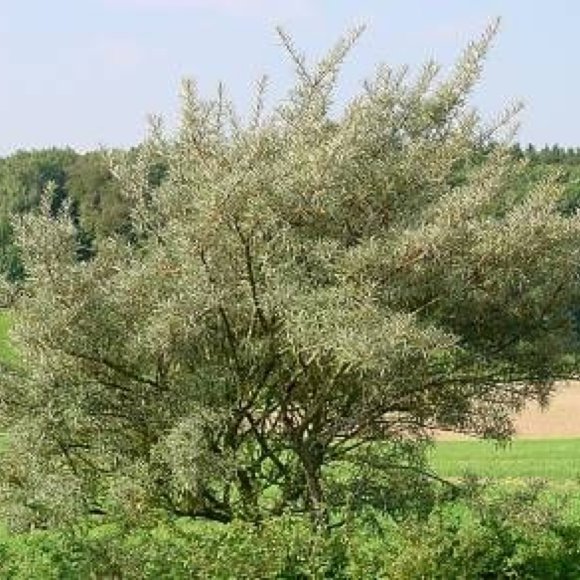
This Male Seaberry (sea buckthorn, sea berry) is used exclusively as a pollinator for female seaberry varieties. While male plants do not produce fruit, they are absolutely essential for heavy, consistent cropping. A single male can pollinate 6–8 female plants, making it a critical component of any productive seaberry planting. Our male seaberries come from hardy Russian breeding lines selected for strong cold tolerance, vigorous growth, and abundant pollen production. They leaf out early, bloom at the proper time for all major female varieties, and thrive in poor soils where seaberries grow best. Whether used in a commercial row or backyard garden, a male seaberry is the backbone of reliable fruit set.
Overview
- Essential pollinator for female seaberries.
- No fruit production — grown only for pollen.
- Russian-type male with strong vigor and bloom overlap.
- Cold hardy and tolerant of poor soils.
- One male pollinates 6–8 females when planted within 50–75 ft.
Growing Details
Latin Name: Hippophae rhamnoides (Male)
Site and Soil: Prefers well-drained sandy or rocky soils; 1/2 day to full sun
Hardiness (Temp): To approximately -40°F
Bearing Age: Begins producing pollen in 1–2 years
Rootstock: Own roots (propagated from cuttings or selected seedlings)
Size at Maturity: 8–12 ft tall depending on variety and site
Bloom Time: Early to mid-spring — overlaps all common female types
Ripening Time: No fruit
Yield: Provides abundant pollen
Pests and Diseases: Low-maintenance and resilient
USDA Zone: 3–8
Additional Notes
- Required for all fruit production in female seaberry varieties.
- Hardy Russian-type males ensure excellent cold tolerance and strong bloom.
- Plant within 50–75 ft of female varieties for best pollination.
- Wind-pollinated — placement relative to prevailing wind improves fruit set.
- Explore more seaberries (sea buckthorn) in our collection: Seaberry Varieties