Description
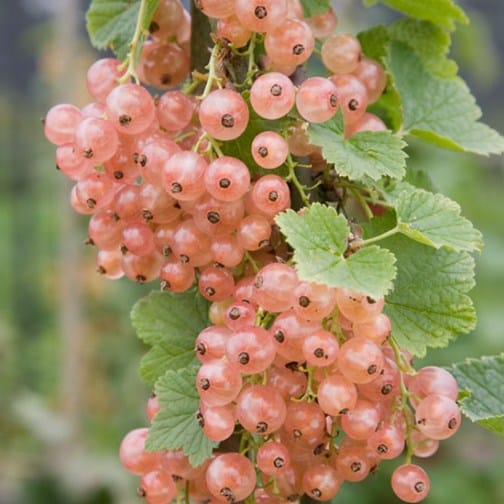
London Market is a heritage English red currant — Ribes rubrum — that has been in commercial cultivation in the UK for nearly a century. It was bred for production: heavy crops of large, tart, bright red berries that ripen uniformly, which makes London Market one of the more efficient red currants in the kitchen because a single harvest brings in most of the season’s fruit at once.
The flavor is the classic English red currant — bright, tart, and distinctly acidic — which is what makes the cultivar shine in the preparations it is most associated with: clear red currant jelly, currant sauce (the traditional partner to game and roast meats), syrups, cordials, and mixed-fruit preserves where red currant brings color and acid balance. Fresh eating is possible but the cultivar’s character is more rewarding in the kitchen than out of hand.
London Market is self-fertile and cold-hardy. The plant is a compact bush — typical Ribes rubrum stature — and prefers full to partial sun, with consistent moisture and reasonable drainage. Like currants generally, it benefits from annual pruning to renew older wood and maintain productivity, and is comparatively low-pressure for pests and diseases in most growing regions.
Overview
- Heritage English red currant; nearly a century in commercial cultivation.
- Large, tart, vibrant red berries with classic red currant character.
- Ripens all at once — single efficient harvest.
- Excellent for jellies, syrups, sauces, and traditional preparations.
- Self-fertile; compact bush habit.
- Cold-hardy; suitable across most temperate climates.
Growing Details
Latin Name: Ribes rubrum ‘London Market’
Site and Soil: Full sun to partial shade; moist, well-drained soil
Hardiness: Cold-hardy; suitable across most temperate North American climates
Rootstock: Grown on own roots from cuttings
Bearing Age: 1–2 years after planting
Size at Maturity: Compact bush habit, typically 3–5 ft tall and wide
Bloom Time: Spring
Ripening Time: Late June into early July; uniform ripening
Pollination: Self-fertile
Pests & Diseases: Red currant is comparatively low-pressure for pests and diseases in most growing regions.
Additional Notes
- Grower’s Insight: London Market’s uniform ripening is the cultivar’s principal practical advantage — most of the season’s harvest comes in at once, which suits jelly-making, syrup, and other kitchen-batch processing far better than cultivars that drag ripening across weeks.
- Regional Insight: Red currant performs well across the cooler reaches of temperate North America, from the maritime Pacific Northwest through the upper Midwest and Northeast.
- Explore more currants in our collection: Currants