Description
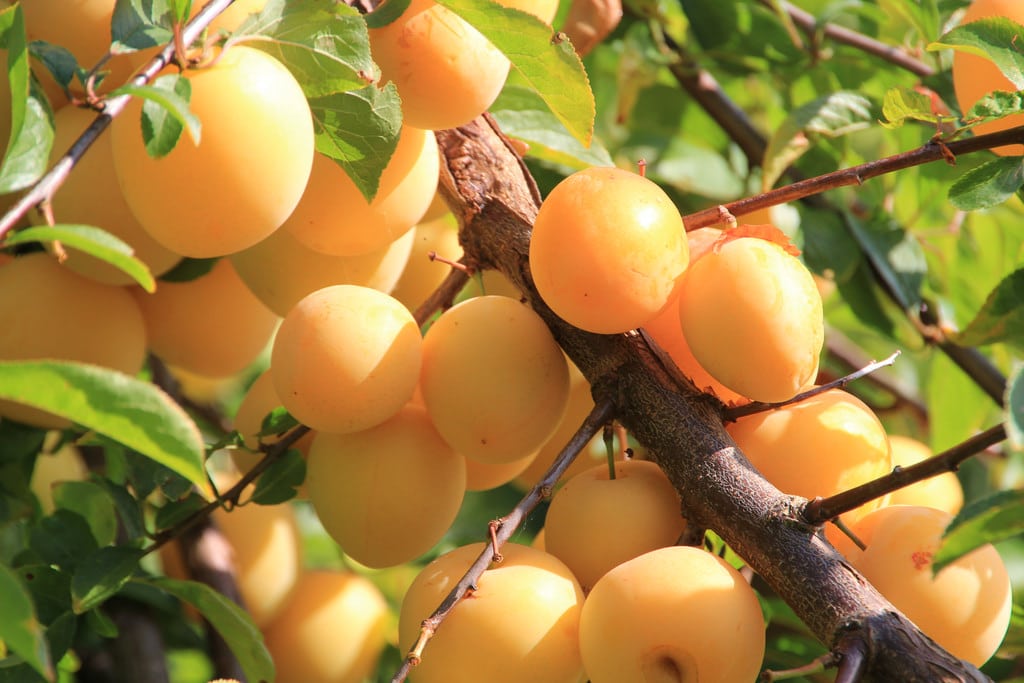
Shiro is a classic yellow Japanese plum valued for sweet, mild flavor and very heavy production. It is best enjoyed fresh, and because it sets so heavily, thinning is essential for achieving larger, higher-quality fruit.
Introduced in 1899 to the US, Shiro became popular for its reliable cropping and approachable eating quality. The fruit ripens to a translucent golden yellow with tender flesh that is juicy and pleasant rather than sharp.
Left unthinned, Shiro produces an abundance of smaller plums. With proper thinning, however, the fruit size increases dramatically, turning a heavy set into fewer but genuinely impressive yellow plums. This responsiveness to thinning is one of Shiro’s defining traits and the key to getting the best results.

Overview
- Japanese plum with yellow skin and yellow flesh
- Sweet, mild flavor suited to fresh eating
- Extremely heavy producer
- Fruit size improves significantly with thinning
- Partially self-fertile; benefits from a pollination partner
Growing Details
Latin Name: Prunus salicina ’Shiro’
Site and Soil: 1/2 day to full day of sun; well-drained soil
Chill Requirement: Approx. 450–500 hours
Hardiness: USDA Zone 5–9
Rootstock: Marianna 2624
Bearing Age: 1–3 years
Size at Maturity: Typically maintained at 10–14 ft tall and wide with pruning
Flowering Time: Early flowering (within plum / pluot types)
Ripening Time: Early to midseason (within Japanese plums); timing varies by region
Pollination: Partially self-fertile; plant a compatible Japanese plum within 20–30 feet for best yields
Pests & Diseases: Standard plum considerations; good airflow is beneficial
Yield: Very heavy without thinning
Additional Notes
- Grower’s Insight: Shiro’s quality is unlocked through thinning. Reducing the crop early transforms fruit size and finish.
- Regional Insight: In cool or wet spring climates, early flowering means pollinator activity can be limited—support early-season pollinators and avoid spraying during bloom.
- Best eaten fresh; fruit softens quickly once ripe.
- Explore more plums in our collection: Plum Trees