Description
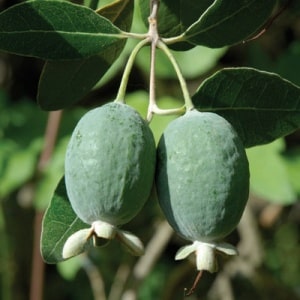
Kaiteri is one of the standout pineapple guava (Feijoa) varieties developed in New Zealand, prized for its rich flavor, smooth flesh, and consistently high production.
Compared to older feijoa cultivars, Kaiteri offers improved sweetness, lower acidity, and a more refined texture—often ranked among the best-tasting feijoas available. This semi-dwarf, evergreen fruiting shrub is both ornamental and productive, featuring fragrant spring flowers and fall-ripening fruit. Feijoas thrive in the Pacific Northwest and similar climates, rewarding growers with unique, aromatic fruit rarely found in grocery stores.
Overview
- Premium New Zealand variety with exceptionally sweet, low-acid flavor.
- Self-fertile but heavier cropping with another feijoa nearby.
- Evergreen shrub provides year-round beauty.
- Ideal for small landscapes — naturally compact and easily pruned.
- Cold-tolerant for a subtropical species, performing well in Zone 8.
Growing Details
Latin Name: Acca sellowiana
Site and Soil: Well-drained soil; 1/2 day to full day of sun
Hardiness (Temp): 10°F
Bearing Age: 2–3 years after planting
Rootstock:
Size at Maturity: 8–12 ft
Bloom Time: Late spring
Ripening Time: October–November (varies by climate and season)
Yield: Heavy cropping
Pests and Diseases: Generally very resilient; minimal issues in most climates
USDA Zone: 8–10
Additional Notes
- Fruit drops when ripe—collect daily for peak quality.
- Prune lightly after harvest to maintain shape and airflow.
- Kaiteri benefits from cross-pollination for maximum yields, though it will fruit independently.
- Explore more subtropical species in our collection: Subtropical Plants