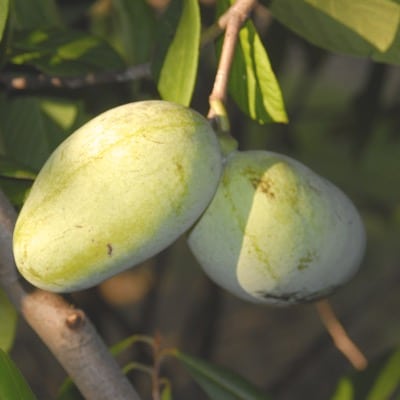
Pawpaw (Tallahatchie)

$39.99

Tallahatchie™ is a Peterson pawpaw selected for smooth texture, low seed content, and a sweet, refined flavor profile—valued by growers who care about usable flesh and eating quality.

  • Large fruit, commonly reported around 9 oz
  • Very low seed content, reported ~5–6% by weight
  • Silky, custard-style texture at full ripeness
  • Mid to late within pawpaw varieties
  • Pollination required; plant a partner within 20–30 feet
Add to Wishlist
Add to Wishlist
SKU: Pawpaw (Tallahatchie) Categories: , Tag:

Description

Tallahatchie™ is Neal Peterson’s seventh released pawpaw cultivar, selected with a clear focus on eating quality and flesh yield. Among named pawpaws, it’s known for combining large fruit with notably low seed content and a smooth, refined texture.

When fully ripe, the fruit develops a silky, spoonable consistency and a sweet flavor profile often described as mellow and floral rather than loud or overpowering. This makes Tallahatchie™ especially well suited to fresh eating and dessert-style uses, including custards and pawpaw ice cream.

Fruit size is commonly reported around a 9 oz average, and seed content is reported in the ~5–6% range by weight—placing it firmly in the high usable-flesh category among named cultivars. Ripening is generally described as mid to late season within pawpaw varieties, and like most pawpaws, Tallahatchie™ performs best when cross-pollinated.

Overview

  • Peterson-bred pawpaw selected for eating quality and flesh yield
  • Large fruit, commonly reported around 9 oz
  • Low seed content, reported ~5–6% by weight
  • Silky, custard-style texture at full ripeness
  • Mid to late within pawpaw varieties
  • Pollination required; plant a compatible variety within 20–30 feet

Growing Details

Latin Name: Asimina triloba ’Tallahatchie™’
Site and Soil: 1/2 day to full day of sun; well-drained soil with consistent moisture
Chill Requirement: Not expressed in chill hours for pawpaws; requires a temperate climate with warm summers
Hardiness: USDA Zone 5–8
Rootstock: Grafted onto pawpaw rootstock
Bearing Age: 3–5 years after planting
Size at Maturity: Typically 15–25 ft tall and wide; manageable with light pruning
Bloom Time: Mid-season (varies by region)
Ripening Time: Mid to late within pawpaw varieties; typically Sept 10–Sept 25 in Frankfort, KY (varies by region)
Fruit Weight: Commonly reported around 9 oz per fruit
Seed Content: Reported ~5–6% seed by weight
Texture Class: Smooth custard; silky, spoonable at full ripeness
Pollination: Pollination required; plant a genetically distinct pawpaw variety within 20–30 feet
Pests & Diseases: Generally low disease pressure with good airflow and moisture management
Yield: Reliable producer once established

Additional Notes

  • Grower’s Insight: Tallahatchie™ stands out when judged at true ripeness—soft, fragrant fruit reveals its smooth texture and clean, refined sweetness.
  • Regional Insight: In cooler-summer regions like the Puget Sound, plant pawpaws in as much sun as possible to support strong growth and consistent fruit finishing.
  • Breeding Background: Developed by Neal Peterson and named after the Tallahatchie River, continuing his focus on improved flesh yield and eating quality.
  • Thin heavy clusters if needed to improve fruit size and even ripening.
  • Explore more pawpaw varieties in our collection:

Planting & Care

At a Glance – Tallahatchie™ Pawpaw

  • Sun: 1/2 day to full day of sun (Puget Sound: as much sun as possible)
  • Soil: Well-drained, fertile soil with steady moisture
  • Water: Consistent during establishment; deep watering once established
  • Size: Typically 15–25 ft at maturity
  • Pollination: Required; plant a partner within 20–30 feet
  • Harvest: Mid to late within pawpaw varieties
  • Hardiness: USDA Zone 5–8

Planting & Care

What Makes Pawpaws Different

  • Pawpaws develop a deep, sensitive taproot early and respond poorly to root disturbance.
  • Container-grown trees with intact root systems establish far more reliably than bare-root pawpaws.

Site Selection

  • Cool-summer regions (including Puget Sound): Plant in as much sun as possible. Shade cloth is unnecessary and can slow establishment.
  • Hot-summer regions: Young trees may benefit from light protection from extreme afternoon heat during their first season.
  • Choose a sheltered site with good air drainage and avoid waterlogged soils.

Soil Preparation

  • Plant in deep, well-drained soil with good organic matter.
  • Raised planting is helpful where drainage is marginal.
  • Mulch to stabilize moisture and protect shallow feeder roots.

Planting Instructions

  • Dig a hole 2–3x the width of the container, no deeper than the root ball.
  • Slide the tree out carefully and keep the root ball intact.
  • Set the tree with the root flare at or slightly above soil level.
  • Backfill with native soil, water deeply, and mulch 2–3 inches (keep mulch off the trunk).

Watering & Fertilizing

  • Maintain consistent moisture during the first 1–2 years.
  • Once established, water deeply during prolonged dry periods.
  • Fertilize lightly in spring only if growth appears weak.

Pollination & Fruit Set

  • Tallahatchie™ requires cross-pollination.
  • Plant another genetically distinct pawpaw variety within 20–30 feet.
  • Hand pollination can improve set where natural pollinators are limited.

Harvest & Handling

  • Harvest when fruit softens slightly and releases easily.
  • Finish ripening indoors for best texture and flavor.
  • Handle gently—pawpaws bruise easily when ripe.

General Tips

  • Mulch and moisture consistency are the two biggest success factors.
  • Judge pawpaws only at full ripeness—underripe fruit never shows true quality.