Description
Rebecca’s Gold is a late-season pawpaw selected by J. M. Riley in 1974 from Corwin Davis seed originating in Bellevue, Michigan. It is grown today for eating quality rather than novelty, with emphasis on sweetness and texture when fruit is allowed to finish properly.
Grower and seller reports consistently point to a soft, custard-style texture at full ripeness, paired with a sweet, tropical-leaning flavor profile. Like many late cultivars, Rebecca’s Gold rewards patience—fruit quality improves significantly when harvested only after full softness and aroma develop.
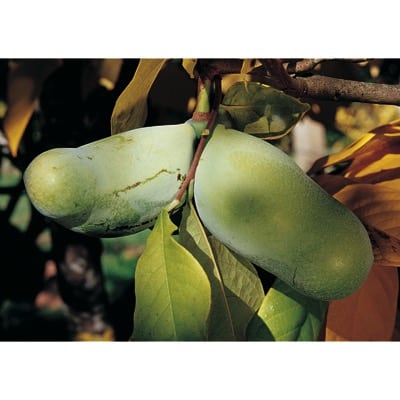
Fruit size is typically medium, with yellow flesh and a kidney-shaped form commonly noted in descriptions. Ripening late within pawpaw varieties, Rebecca’s Gold is best suited to sites that can provide adequate warmth and sun late in the season.
Overview
- Late-season pawpaw selected by J. M. Riley (1974)
- Yellow flesh with soft, custard-style texture at ripeness
- Sweet flavor that develops best when fully finished
- Medium fruit size with usable pulp
- Pollination required for reliable fruit set
Growing Details
Latin Name: Asimina triloba ’Rebecca’s Gold’
Site and Soil: 1/2 day to full day of sun; well-drained soil
Chill Requirement: Not typically expressed in chill hours for pawpaws; performs best in temperate regions with warm summers
Hardiness: USDA Zone 5–8
Rootstock: Grafted onto pawpaw rootstock
Bearing Age: 3–5 years after planting
Size at Maturity: Typically 15–25 ft tall and wide; can be maintained smaller with pruning
Bloom Time: Mid-spring
Ripening Time: Late within pawpaw varieties; typically Sept 18–Oct 2 in Frankfort, KY (varies by region)
Fruit Weight: Medium; varies by season and crop load
Seed Content: Typically ~8% of fruit weight, but can run higher in some crops or sites
Texture Class: Soft custard (melting, very soft at full ripeness)
Pollination: Pollination required; plant a genetically distinct pawpaw variety within 20–30 feet
Pests & Diseases: Generally low disease pressure with good airflow and moisture management
Yield: Moderate once established
Additional Notes
- Grower’s Insight: Rebecca’s Gold shows its best qualities only at full ripeness—soft texture and sweetness improve dramatically when fruit is allowed to finish completely.
- Regional Insight: As a late cultivar, Rebecca’s Gold benefits from warm microclimates and full sun; in cooler or shorter-season regions, finishing fruit can be more variable.
- Harvest only when fruit softens and becomes aromatic; underripe fruit will not develop proper flavor or texture.
- Because late-season pawpaws soften quickly, plan for immediate fresh eating or prompt processing.
- Explore more pawpaw varieties in our collection: Pawpaw Trees