Sale!

Mulberry (White Fruiting)

Price range: $49.99 through $79.99

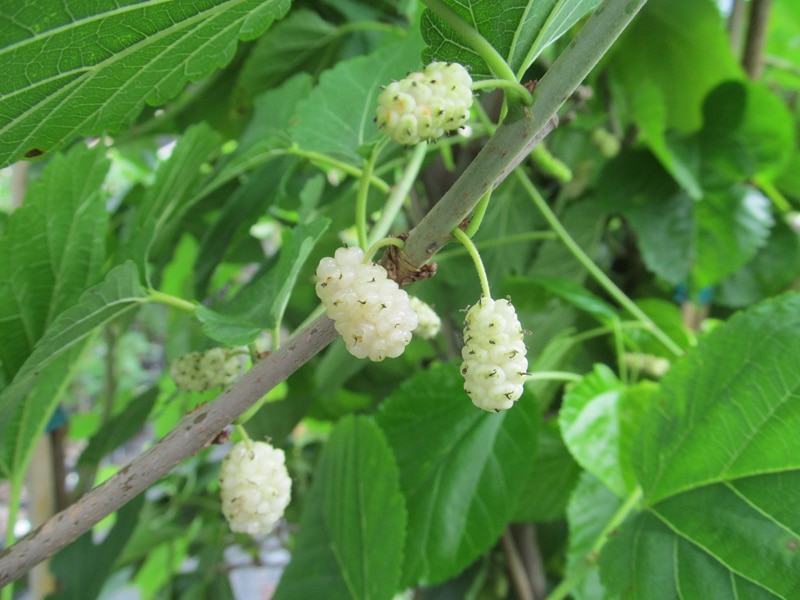
This White Fruiting Mulberry is one of the most impressive white mulberries we grow—sweet, heavy-bearing, and capable of producing plump, substantial berries that are excellent fresh and outstanding for drying.

  • Sweet white mulberries with excellent fresh-eating quality
  • In our plantings, fruit can approach 1″ long and notably plump
  • Extremely productive once established
  • Excellent for drying and adding to tea
  • Self-fertile
Add to Wishlist
Add to Wishlist
SKU: Mulberry (White Fruiting) Categories: , , Tag:

Description

White mulberries are often treated like a background fruit—sweet, easy, and plentiful. This White Fruiting Mulberry selection is different. It’s one of the most impressive white mulberries we grow, delivering fruit that can be surprisingly substantial for a white type, with a clean sweetness that holds up whether you eat it fresh or preserve it.

The berries ripen to a pale white and are best harvested when fully finished and soft. In our growing conditions, fruit can approach an inch long and be notably plump—an uncommon trait for white mulberries and a big part of why this tree stands out in our collection.

Where it really shines is productivity. Once established, it can put on heavy crops, making it a strong choice if you want volume for fresh eating and preserving. Many growers dry mulberries for storage and then drop the dried fruit straight into tea for a naturally sweet, berry-forward infusion—simple, practical, and genuinely enjoyable.

Overview

  • Sweet white mulberries with excellent fresh-eating quality
  • In our plantings, fruit can be notably plump for a white mulberry
  • Heavy-bearing and highly productive once established
  • Excellent for drying and adding to tea
  • Self-fertile and easy to grow

Growing Details

Latin Name: Morus alba (White Fruiting selection)
Site and Soil: 1/2 day to full day of sun; well-drained soil
Hardiness: USDA Zone 4–9
Rootstock: Russian mulberry (Morus alba tatarica)
Bearing Age: 1–3 years
Size at Maturity: Typically 15–25 ft tall and wide with pruning (larger if left unpruned)
Flowering: Spring; inconspicuous catkins (not showy)
Ripening Time: Early to mid-summer; timing varies by climate
Pollination: Self-fertile
Pests & Diseases: Generally low-maintenance with few serious issues
Yield: High once established

Additional Notes

  • Grower’s Insight: We’ve grown many white mulberries—this one stands out for fruit size and production. If you want a white mulberry that actually feels “premium,” this is a strong contender.
  • Regional Insight: Performs well across a wide range of climates; full sun improves sweetness and helps fruit finish cleanly.
  • For best flavor, harvest fully ripe fruit—white mulberries are sweetest when they’re completely finished and release easily.
  • Mulberries can stain when dropped—consider placement if planting near patios or light hardscape.
  • Explore more mulberries in our collection: Mulberry Trees
Planting & Care

At a Glance – White Fruiting Mulberry

  • Sun: 1/2 day to full day of sun
  • Soil: Well-drained soil; adaptable once established
  • Water: Moderate; drought tolerant once established
  • Size: Vigorous; manage with pruning
  • Pollination: Self-fertile
  • Harvest: Early to mid-summer; timing varies by climate
  • Hardiness: USDA Zone 4–9

Planting & Care – White Fruiting Mulberry

Site Selection

  • Choose a sunny location for best sweetness and heavy production.
  • Allow room for canopy spread, or plan to maintain size with pruning.
  • Plant away from hardscape if fallen fruit would be a concern.

Soil Preparation

  • Mulberries tolerate many soil types, but good drainage improves vigor.
  • Avoid sites with prolonged standing water.
  • Ideal soil pH ranges from 6.0 to 7.5.

Planting Instructions

  • Dig a hole twice as wide as the root system.
  • Set the root flare at or just above soil level.
  • Backfill with native soil and water deeply.
  • Mulch lightly, keeping mulch away from the trunk.

Watering & Fertilizing

  • Water consistently during the first growing season.
  • Once established, deep but infrequent watering is usually sufficient.
  • If growth is weak, apply a light spring feeding; avoid excessive nitrogen in mid-summer.

Pruning & Size Management

  • Prune during dormancy to manage height and keep fruit accessible.
  • Thin crowded branches to improve airflow and fruiting wood.
  • Consistent annual pruning is the easiest way to maintain a productive, harvestable canopy.

Harvest & Use

  • Harvest when fruit is fully ripe and releases easily.
  • Excellent fresh; also ideal for drying.
  • Dried mulberries can be eaten as a snack or added directly into tea for natural sweetness and a berry-rich infusion.

General Tips

  • Expect increasing yields as the tree matures.
  • Birds love mulberries—netting may help if they beat you to the crop.
  • For volume harvests, lay a clean tarp under the canopy and gently shake ripe fruit down.