Description
Nikita White Mulberry is a purpose-bred mulberry developed for growers in colder climates who don’t want to gamble on warm-region selections. Originating from the Nikita Botanical Gardens, this variety was selected for resilience, productivity, and dependable performance through harsh winters.
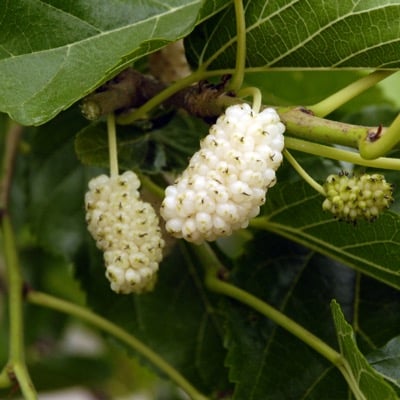
The fruit is white to pale cream when ripe and notably sweet when allowed to fully mature. Unlike novelty white mulberries grown primarily for color, Nikita White is valued for its eating quality—soft, juicy fruit with a clean sweetness that appeals to both fresh eating and processing.
The tree itself follows a classic Morus alba growth habit: vigorous, upright to spreading, and responsive to pruning. With annual size management, it can be maintained at a practical height while still producing heavy crops. For growers in cooler regions, Nikita White offers a level of reliability that many mulberries simply don’t.
Overview
- Cold-hardy white mulberry bred for northern climates
- Sweet, mild-to-rich flavor when fully ripe
- Early to mid-summer harvest window
- Vigorous growth with good response to pruning
- Self-fertile and productive once established
Growing Details
Latin Name: Morus alba ’Nikita’
Site and Soil: 1/2 day to full day of sun; well-drained soil
Hardiness: USDA Zone 5–9
Rootstock: Russian mulberry (Morus alba tatarica)
Bearing Age: 1–3 years
Size at Maturity: Typically 15–20 ft tall and wide with pruning and training
Flowering: Spring; inconspicuous catkins (not showy)
Ripening Time: Early to mid-summer; timing varies by climate
Pollination: Self-fertile
Pests & Diseases: Generally low-maintenance with few serious issues
Yield: Productive once established
Additional Notes
- Grower’s Insight: Nikita White stands out because it was bred with cold winters in mind. It’s a strong option for growers who want mulberries without pushing the limits of winter survival.
- Regional Insight: Especially well suited to colder and temperate regions where winter hardiness matters; also performs reliably in milder climates with adequate sun.
- Fruit is sweetest when allowed to fully ripen on the tree.
- White fruit results in less visible staining, though sweetness and reliability are the primary reasons growers choose this variety.
- Explore more mulberries in our collection: Mulberry Trees