Description
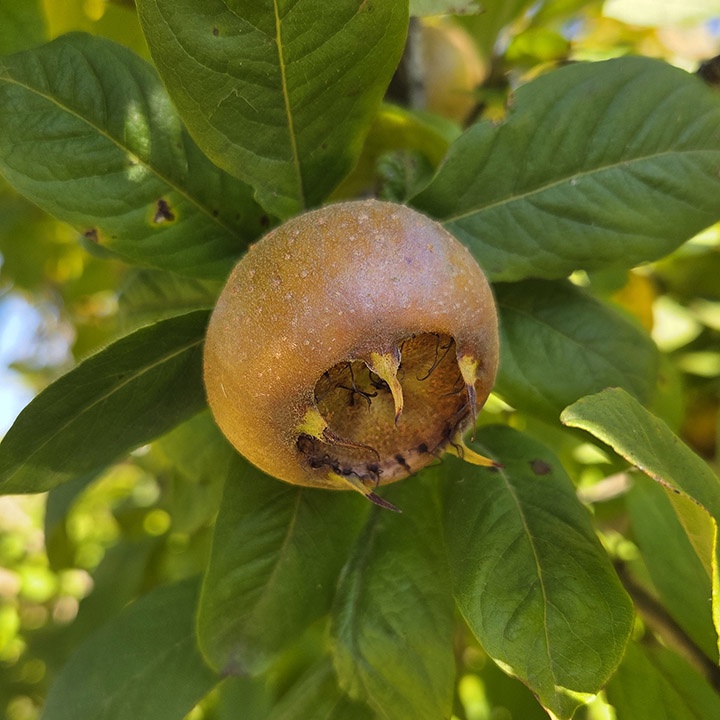
Marron is a French-bred medlar — the name means “chestnut” in French, referencing the cultivar’s deep brown fruit color at harvest. It is one of the more compact medlars in commerce, maturing at roughly 8 to 10 feet, which makes it a useful choice for home gardens where a full-size medlar would be too much tree.
The fruit is medium to large and chestnut-brown, with a spicy, rich character that develops after the fruit has been bletted in cool storage. Like all medlars, Marron is harvested hard and brown in the fall, then held for several weeks until the flesh softens into the soft, sweet-tart, applesauce-like texture medlar is valued for. Bletted fruit can be eaten with a spoon, scooped from the skin, or cooked into jams, jellies, fruit butters, and traditional medlar paste.
Marron is self-fertile, has a low chill requirement, and is hardy across roughly USDA Zone 5–9. It prefers full to half-day sun and well-drained soil, typically begins bearing two to three years after planting on its quince rootstock, and like medlar generally is comparatively low-pressure for pests and diseases across most growing regions.
Overview
- French-bred medlar; name references the chestnut-brown fruit color.
- Naturally compact habit at 8–10 ft — well suited to smaller home gardens.
- Medium-to-large chestnut-brown fruit, spicy and rich after bletting.
- Low chill requirement; suitable across roughly USDA Zone 5–9.
- Self-fertile; productive at maturity.
- Showy white spring flowers and russet-bronze autumn foliage.
Growing Details
Latin Name: Mespilus germanica ‘Marron’
Site and Soil: 1/2 day to full day of sun; well-drained soil
Hardiness: Roughly USDA Zone 5–9
Rootstock: Grafted onto Provence Quince BA29C rootstock
Bearing Age: 2–3 years after planting
Size at Maturity: Approximately 8–10 ft tall and wide; naturally compact form
Bloom Time: Late spring; white flowers at branch tips
Ripening Time: Fall; fruit then requires bletting before eating
Chill Requirement: Low
Pollination: Self-fertile
Pests & Diseases: Medlar is comparatively low-pressure for pests and diseases across most growing regions
Additional Notes
- Grower’s Insight: Marron’s naturally compact habit makes it one of the more practical medlars for home gardens — a smaller tree to manage while still carrying the spicy, rich bletted fruit medlar is grown for.
- Regional Insight: Medlar performs across a wide swath of temperate North America, from the maritime Pacific Northwest through the upper Midwest and Northeast into the upper South; Marron’s low chill requirement and Zone 5–9 hardiness make it adaptable across most of that range.
- Explore more medlar in our collection: Medlar