Kumquat (Marumi)

Price range: $59.99 through $389.00

Marumi kumquat is a compact citrus with a beautifully rounded canopy and full, round fruit meant to be eaten whole—sweet, aromatic skin balanced by citrus flavor that softens as the fruit fully ripens.

  • Kumquat eaten whole (skin and flesh together).
  • Round, full-sized fruit with sweetness that improves on the tree.
  • Late fall through winter harvest.
  • Dense, sculptural canopy with abundant fruit set.
  • Self-fertile.
Add to Wishlist
Add to Wishlist
SKU: Kumquat (Marumi) Categories: , , Tag:

Description

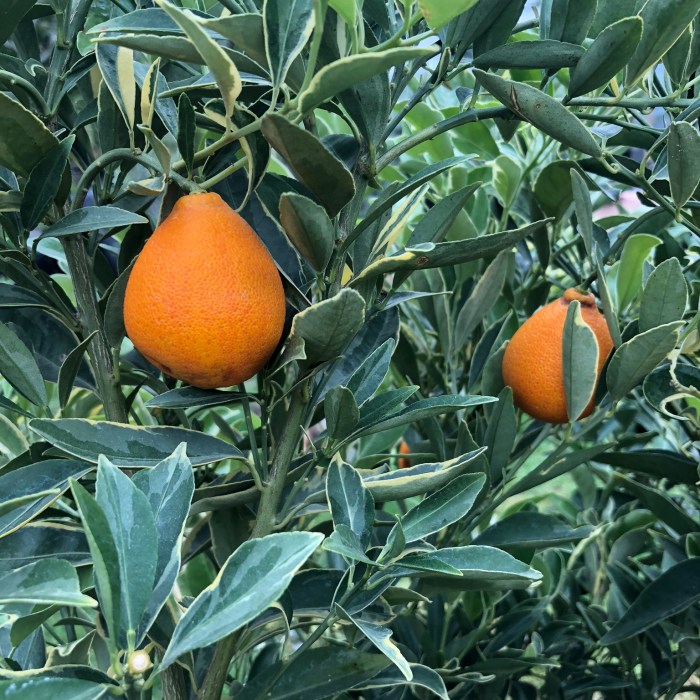
Marumi kumquat is widely regarded as one of the most visually striking kumquats to grow. We just love this variety. The canopy forms naturally into a dense, rounded shape, the leaves are closely spaced and full, and by winter the branches are often loaded with glowing, round fruit. It’s as much a presence as it is a producer.

The fruit is eaten whole—no peeling—with a sweet, aromatic skin and citrus flesh that noticeably softens as it reaches full color. Harvest timing matters with Marumi: fruit allowed to hang longer develops a smoother, more integrated flavor. Combined with its productivity and compact size, this makes Marumi especially rewarding for patio growers and anyone who values both form and function.

Overview

  • Round kumquat eaten whole.
  • Flavor mellows as fruit fully colors and hangs on the tree.
  • Late fall through winter ripening.
  • Dense, rounded canopy with abundant fruit set.
  • Self-fertile.

Growing Details

Latin Name: Citrus japonica ’Marumi’
Site and Soil: Full sun; well-drained soil
Rootstock: 1-gallon trees on Flying Dragon; larger sizes on C-35
Hardiness: Best suited to USDA Zones 8–11; hardy to around 22°F with protection once established
Bearing Age: Often fruits immediately; grafted trees may produce in their first season
Size at Maturity:
Flying Dragon: Typically 4–6 ft tall and wide
C-35: Typically 8–12 ft tall and wide
Note: Trees grown in containers remain smaller and are easily maintained with pruning.
Bloom Time: Spring to early summer (timing varies by climate and culture)
Ripening Time: Late fall through winter
Pollination Requirements: Self-fertile
Pests & Diseases: Similar to other citrus; good airflow and drainage reduce issues

Additional Notes

  • Grower’s Insight: Marumi’s naturally dense, rounded canopy and heavy fruit set give it a uniquely full appearance—one of those citrus trees that looks intentionally shaped even without frequent pruning.
  • Regional Insight: Performs especially well in warm citrus regions and excels as a container-grown citrus in cooler climates when winter protection is provided.
  • Harvest Tip: Let fruit reach full color and hang longer on the tree—Marumi’s flavor softens noticeably with maturity.
  • Explore more kumquat varieties in our collection: Kumquats
Planting & Care

At a Glance – Marumi Kumquat

  • Sun: 3/4 day to full day of sun
  • Soil: Well-drained soil
  • Soil pH: Performs best between 5.5–6.5
  • Water: Moderate; consistent during establishment
  • Tree Size: Compact with a dense, rounded canopy
  • Pollination: Self-fertile
  • Harvest: Late fall through winter
  • Hardiness: Hardy to ~22°F with protection

Planting & Care – Marumi Kumquat

Site Selection

  • Choose a sunny, warm location to support flowering, fruit set, and winter ripening.
  • South- or west-facing exposures improve performance in marginal climates.
  • Shelter from cold wind helps protect foliage and fruit.

Soil Preparation (In-Ground vs Container)

  • In-ground: Excellent drainage is essential; mound or raise planting areas in heavier soils.
  • In-ground: Slightly acidic soil supports nutrient uptake and steady growth.
  • Container: Use a fast-draining citrus mix in a pot with ample drainage holes.
  • Container: Container growing allows easy winter protection and size control.

Planting Instructions

  1. Dig a hole about twice the width of the root ball, or choose a container slightly larger than the root mass.
  2. Set the tree so the root flare sits at or slightly above finished soil or potting mix.
  3. Backfill gently and water thoroughly to settle the soil.
  4. Mulch lightly for in-ground trees, keeping mulch away from the trunk.

Watering (In-Ground vs Container)

  • In-ground, establishment: Keep soil evenly moist during the first growing season.
  • In-ground, established: Deep, periodic watering supports steady growth and fruiting.
  • Check: Water when soil is dry 3–6 inches below the surface.
  • Container: Water thoroughly, then allow the top couple inches of mix to dry.

Fertilizing

  • Marumi responds well to consistent citrus nutrition.
  • Base feeding: Apply slow-release citrus fertilizer in early spring and early summer.
  • Support feeding: Supplemental liquid feeding during active growth supports flowering and fruit development.
  • Reduce feeding later in the season to encourage winter hardening.

Cold Care

  • Protect young trees during freezing weather.
  • Container trees can be moved to sheltered or indoor locations during cold snaps.

Pruning & Harvest

  • Minimal pruning is needed; light shaping maintains airflow and canopy form.
  • Harvest when fruit is fully orange for the smoothest flavor.

General Tips

  • Marumi naturally maintains a tidy, rounded shape.
  • Letting fruit hang longer is the key to unlocking its best eating quality.