Description
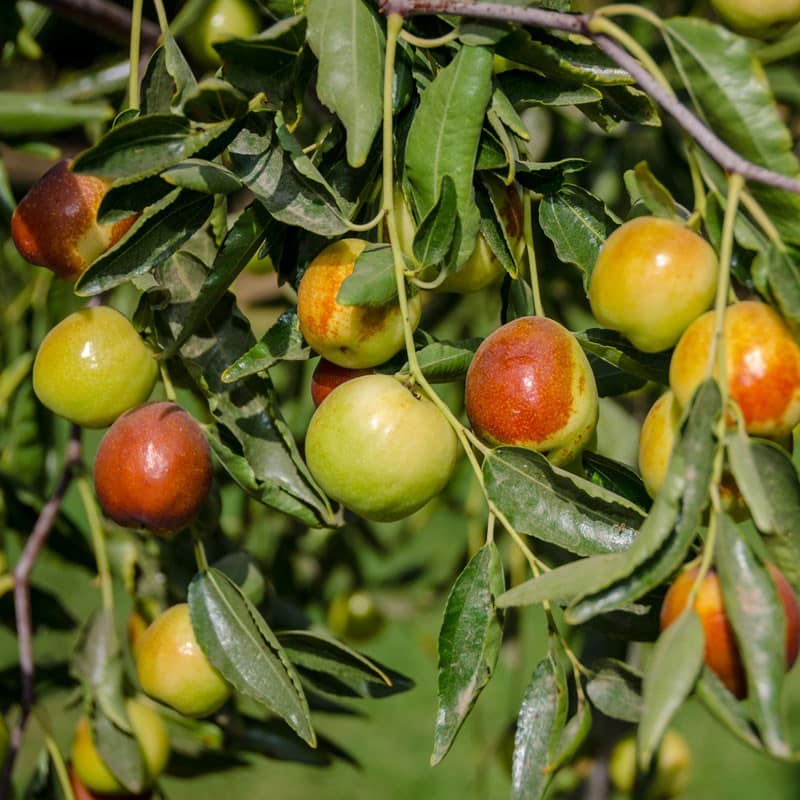
Honey Jar is an early-ripening jujube valued for crisp texture, clean sweetness, and dependable performance in a wide range of climates.
When harvested at the firm stage, it delivers a notably sweet, concentrated flavor that has made it one of the most sugar-forward fresh-eating jujubes grown in home orchards. The fruit is best enjoyed crisp, when sweetness is high and texture is refreshing.
Honey Jar is especially well known for producing reliably and reaching full eating quality even in regions where longer-season jujubes can be harder to finish. This consistency has made it a foundational variety for growers new to jujubes as well as those expanding established plantings.
Overview
- Early-ripening jujube with crisp texture
- Clean, notably sweet flavor at the firm eating stage
- Often reported with very high sugar content when fully mature
- Self-fertile; improved yield with another variety nearby
- Reliable option for cooler and marginal jujube climates
Growing Details
Latin Name: Ziziphus jujuba ’Honey Jar’
Primary Use: Fresh eating; also suitable for drying
Site and Soil: 1/2 day to full day of sun; well-drained soil
Chill Requirement: Low chill; exact requirements not well defined
Hardiness: USDA Zone 5–10
Rootstock: Grafted onto jujube rootstock
Bearing Age: Often fruits immediately; grafted trees may produce in their first season
Size at Maturity: Typically maintained at 10–15 ft tall and wide with pruning
Bloom Time: Late spring to early summer
Ripening Time: Early within jujube varieties; timing varies by region
Pollination: Self-fertile; improved yield with another jujube planted within 20–30 feet
Pests & Diseases: Generally low pressure; routine orchard hygiene recommended
Yield: Reliable producer once established
Additional Notes
- Grower’s Insight: Honey Jar is widely reported to reach sugar levels in the upper 20s to 30+ °Brix when fully mature, making it one of the more sugar-forward fresh-eating jujubes in U. S. grower reports.
- Regional Insight: Performs especially well in temperate regions, including the Pacific Northwest, where its early ripening and reliable fruit set help ensure consistent harvests.
- Harvest fruit firm for fresh eating; allow fruit to fully brown for drying and storage.
- Explore more jujube varieties in our collection: Jujube Trees