Description
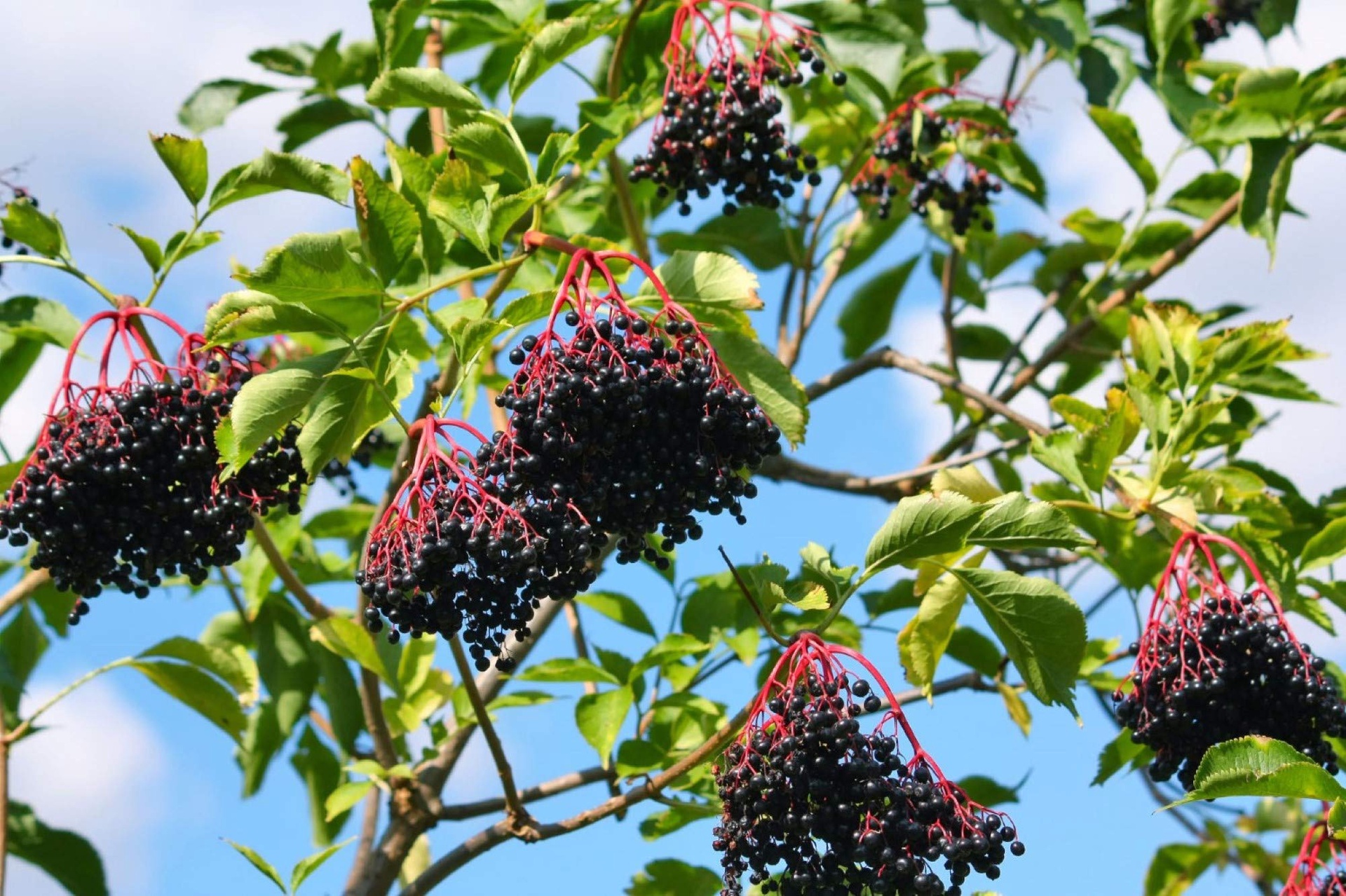
Sampo is a Danish-bred European elderberry — Sambucus nigra — that has earned a place in commercial elderberry production in Sweden and Germany. It carries lush dark green foliage and produces heavy crops of very dark, intensely flavorful berries that are especially well suited to elderberry syrup, the traditional Northern European preparation that has driven much of the cultivar’s commercial adoption.
The shrub grows to roughly 10 feet in sun or partial shade and bears early — often beginning in the first or second year after planting. Berries ripen in September and are harvested in clusters; the deep color and concentrated flavor translate directly into the depth of color and flavor in finished syrup, jams, and preserves. Like European elderberries generally, Sampo is best processed for cooking and not eaten raw in quantity.
Sampo is partially self-fertile and very cold-hardy — reports place its tolerance at roughly -30°F. It prefers moist, well-drained soil and produces heavier crops when planted with another European elderberry cultivar nearby to support cross-pollination. The plant is reliably productive and one of the steadier European elderberry choices for home and small commercial growers.
Overview
- Danish-bred European elderberry; commercial in Sweden and Germany.
- Heavy crops of very dark, intensely flavorful berries.
- Excellent for elderberry syrup, jams, and preserves.
- Reaches roughly 10 ft in sun or partial shade.
- Very cold-hardy — reported to roughly -30°F.
- Partially self-fertile; best paired with another European variety.
Growing Details
Latin Name: Sambucus nigra ‘Sampo’
Site and Soil: Full sun to partial shade; moist, well-drained soil
Hardiness: Very cold-hardy; reported to roughly -30°F
Rootstock: Grown on own roots from cuttings
Bearing Age: 1–2 years after planting
Size at Maturity: Approximately 10 ft tall
Bloom Time: Late spring; large white flower clusters
Ripening Time: September; very dark berries in clusters
Pollination: Partially self-fertile; heavier crops with another European elderberry within roughly 30 ft
Pests & Diseases: European elderberry is comparatively low-pressure for pests and diseases in most growing regions
Additional Notes
- Grower’s Insight: Sampo earns its commercial reputation in Scandinavian production because the deep berry color and concentrated flavor carry directly through into finished elderberry syrup, where Sampo holds up especially well against the cultivars typically grown for fresh-market sale.
- Regional Insight: European elderberry performs across a wide swath of temperate North America, from the maritime Pacific Northwest through the upper Midwest and Northeast; Sampo’s Scandinavian breeding background suits it especially well to cool-summer and continental northern climates.
- Explore more elderberry in our collection: Elderberry