Cornelian Cherry (Pioneer™)

$39.99

Pioneer™ is a Cornelian cherry valued for large fruit and a later harvest window that helps extend the Cornus mas season. With its elongated, dark red fruit and dependable set under cross-pollination, it’s a practical choice for growers planning a staggered Cornelian cherry harvest.

  • Mid-season to mid‚Äìlate timing in our lineup (best-guess mid-August)
  • Large, elongated fruit compared to many Cornus mas cultivars
  • Strong processing cultivar for preserves, syrups, sauces, and juices
  • Productive once established with improved yields under cross-pollination
  • Best fruit set with another Cornelian cherry variety within 20‚Äì30 feet
Add to Wishlist
Add to Wishlist
SKU: Cornelian Cherry (Pioneer™) Categories: , Tag:

Description

Pioneer™ is a Cornelian cherry valued for large fruit and a later harvest window that helps extend the Cornus mas season. With its elongated, dark red fruit and dependable set under cross-pollination, it’s a practical choice for growers planning a staggered Cornelian cherry harvest.

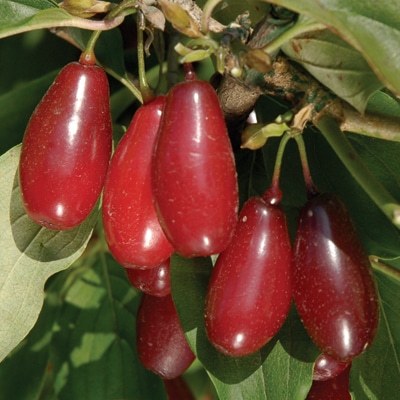
The fruit is consistently described as elongated—often compared to a small pear or bottle shape—giving Pioneer a distinctive look at harvest. When fully ripe, the flavor lands in the classic Cornelian cherry lane: bright, sweet-tart, and especially strong for traditional processing like jams, syrups, sauces, and juices.

Cornelian cherry (Cornus mas) is an edible dogwood grown for fruit—sometimes called “dogwood cherry,” even though it isn’t a true cherry. Unlike ornamental dogwoods grown mainly for blooms, Cornus mas ripens late-summer fruit with a bright, tart-sweet flavor that becomes noticeably more enjoyable at full maturity. The fruit is excellent fresh when fully ripe, and it’s one of the classic plants for high-quality jams, syrups, sauces, and preserves.

Overview

  • Ukrainian Cornelian cherry selection valued for large fruit and harvest-season extension
  • Elongated, pear-shaped fruit form that stands out at harvest
  • Dark red fruit at maturity with classic sweet-tart Cornus mas character
  • Strong processing profile for preserves, syrups, sauces, and juice
  • Mid-season to mid–late placement in our lineup (best-guess mid-August)
  • Improved yields with cross-pollination; plant another variety within 20–30 feet

Growing Details

Latin Name: Cornus mas ‘Lukianovskyi’ (marketed as Pioneer™)
Site and Soil: 1/2 day to full day of sun; well-drained soil
Hardiness: USDA Zones 4–8
Rootstock: Grafted onto cornelian cherry rootstock
Bearing Age: 1–3 years
Size at Maturity: Typically 8–12 ft with training and pruning (shrub or small tree form)
Bloom Time: Very early spring (varies by region)
Ripening Time: Mid-season for Cornelian cherry (best-guess mid-August in our lineup; varies by region)
Fruit Size: Large for Cornus mas; commonly reported around 5.4–6.0 g average with an elongated / pear-like shape
Sugar / Brix: Unknown (no cultivar-specific published data available)
Pollination: Best fruit set with another Cornus mas variety planted within 20–30 feet
Pests & Diseases: Generally low disease pressure with good airflow and basic orchard care
Yield: Productive once established; heavier and more consistent crops with cross-pollination

Additional Notes

  • Grower’s Insight: Pioneer’s elongated fruit shape is one of its defining traits—let fruit reach full color and slight softness for the most complete flavor.
  • Regional Insight: A practical choice for cold-winter regions where Cornus mas is valued for resilience and dependable fruiting, and for anyone building a staggered harvest plan.
  • Harvest Planning: Pair with an early cultivar (Red Star, Elegant) and a late cultivar (Exotica, Sunrise) to extend your season.
  • Explore more Cornelian cherry varieties in our collection: Cornelian Cherries

Planting & Care

At a Glance – Pioneer™ (‘Lukianovskyi’)

  • Sun: 1/2 day to full day of sun
  • Soil: Well-drained; avoid standing water; tolerant of neutral to alkaline soils
  • Water: Moderate; steady moisture during establishment and fruit fill
  • Size: Typically 8–12 ft with training and pruning
  • Pollination: Best yields with another Cornus mas variety within 20–30 feet
  • Harvest: Mid-season to mid–late in the lineup (best-guess mid-August)
  • Hardiness: USDA Zones 4–8

Planting & Care

Site Selection

  • Choose a site with at least half-day sun; full sun improves flowering and fruit quality.
  • Avoid low or wet areas—drainage matters more than soil richness.
  • Decide early whether you want shrub form (multi-stem) or small tree form (easier harvest access).

Soil & Drainage

  • Well-drained soil is essential; Cornelian cherry does not tolerate standing water.
  • This species performs well in neutral to alkaline soils when drainage is adequate.
  • Improve drainage broadly rather than enriching a narrow planting hole.

Planting

  • Dig a hole 2–3x as wide as the root mass and no deeper than the container.
  • Plant at the same depth as grown in the pot.
  • Backfill with native soil, water thoroughly, and mulch 2–3 inches deep.

Watering

  • Water consistently during the first 1–2 years to establish deep roots.
  • After establishment, allow soil to partially dry between deep waterings.
  • During fruit fill, aim for steady moisture rather than drought-to-soak swings.

Fertilizing

  • Light feeding is sufficient; compost or a balanced fertilizer in early spring if needed.
  • Avoid excessive nitrogen, which can reduce flowering and fruiting.

Training & Pruning

  • Train as a multi-stem shrub or small tree depending on your preferred form.
  • Prune lightly in late winter to remove dead, crossing, or congested branches.
  • Heavy pruning immediately after flowering will reduce fruit that season.

Pollination

  • Cornelian cherries set more reliably with cross-pollination.
  • Plant another Cornus mas variety within 20–30 feet for best results.

Harvest & Use

  • Harvest when fruit reaches full color and begins to soften slightly.
  • Best for preserves, syrups, sauces, and juices; fresh eating is best at full ripeness.
  • Use Pioneer as part of a staggered plan with earlier and later cultivars to extend harvest.